Apollo 16
Apollo 16 was NASA’s tenth crewed lunar landing mission and the fifth to land on the Moon. Launched on April 16, 1972, it touched down in the Descartes Highlands on April 21, carrying astronauts John Young and Charles Duke, with Ken Mattingly orbiting above. The mission’s objectives included geological fieldwork using the Lunar Roving Vehicle, deployment of surface experiments (ALSEP), and the return of nearly 96 kg of lunar samples. The mission concluded with a safe Earth splashdown on April 27, 1972.
Source: nasa.gov
APODs including "Apollo 16"
The Far Side of the Moon
25/02/2007
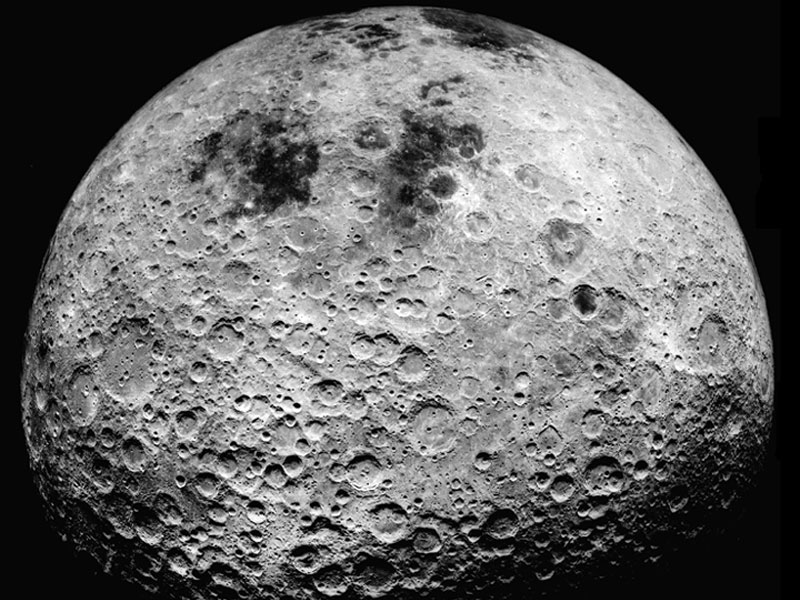
Does this moon look familiar? Possibly not, even though it is Earth's Moon. Locked in synchronous rotation, the Moon always presents its well-known near side to Earth. But from lunar orbit, Apollo astronauts also grew to know the Moon's far side. This sharp picture from Apollo 16's mapping camera shows the eastern edge of the familiar near side (top) and the strange and heavily cratered far side of the Moon. Surprisingly, the rough and battered surface of the far side looks very different from the near side which is covered with smooth dark lunar maria. The likely explanation is that the far side crust is thicker, making it harder for molten material from the interior to flow to the surface and form the smooth maria.