Comet
A comet is a small Solar System body composed mainly of ice, dust, and organic compounds. As they approach the Sun, cometary ices sublimate, releasing gas and dust that form the glowing coma and distinctive tails—often extending millions of kilometers.
Comets originate from two primary reservoirs: the Kuiper Belt—home to short-period comets with orbits under ~200 years—and the distant Oort Cloud, which sends long-period comets with orbits spanning thousands of years. Occasionally, interstellar objects like ‘Oumuamua pass through our system, appearing comet-like.
They are “dirty snowballs” and among the most primitive remnants of the early Solar System, preserving original ices and organic material from 4.6 billion years ago.
Landmark missions include ESA’s Rosetta—with its lander Philae—which orbited and sampled Comet 67P/Churyumov–Gerasimenko (2014–2016). NASA’s Deep Impact struck Comet Tempel 1 in 2005 to analyze interior composition.
These missions discovered complex organic molecules, including amino-acid precursors, and supported the theory that comets may have delivered water and prebiotic compounds to early Earth.
Looking ahead, ESA–JAXA’s Comet Interceptor (launch planned for 2029) intends to perform a rapid flyby of a dynamically new or interstellar comet, using multiple spacecraft to sample both nucleus and coma environments.
Comets are studied across the electromagnetic spectrum—from radio to gamma rays—using telescopes and spacecraft to understand composition, internal structure, activity, and their roles in planetary formation, the evolution of the solar system, and the origin of life.
Sources
APODs including "Comet"
Eugene Shoemaker: 1928-1997
15 January 1998
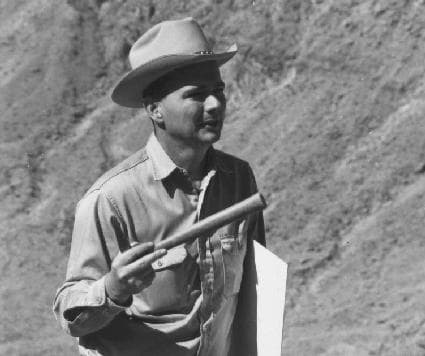
ugene Shoemaker's passion was Astrogeology. He dreamed of going to the Moon. Credited with inventing the branch of Astrogeology within the U.S. Geological Survey, his contributions to the field and the study of impact craters, lunar science, asteroids, and comets are legendary. Though his own career as an astronaut/geologist was sidelined by a health problem, he helped train the Apollo astronauts in geology and the investigation of the lunar surface. Seen here at Meteor Crater, Arizona in the mid 1960s, Shoemaker was killed in a tragic car accident in July 1997. He is survived by his wife and professional colleague, Carolyn, and children. In a fitting tribute conceived by a former student, Eugene Shoemaker's ashes were placed on-board the Lunar Prospector spacecraft which has now successfully reached a polar mapping orbit around the Moon. After completing its scientific mission, the spacecraft will ultimately impact the lunar surface.