Crab Nebula
Also known as Messier 1 (M1), the Crab Nebula is a supernova remnant resulting from a stellar explosion observed in 1054 CE. Located approximately 6,500 light-years away in the constellation Taurus, it spans about 10 light-years and is expanding at roughly 1,500 kilometers per second.
Source: apod.nasa.gov
APODs including "Crab Nebula"
The Shape of the Southern Crab
24/04/2019
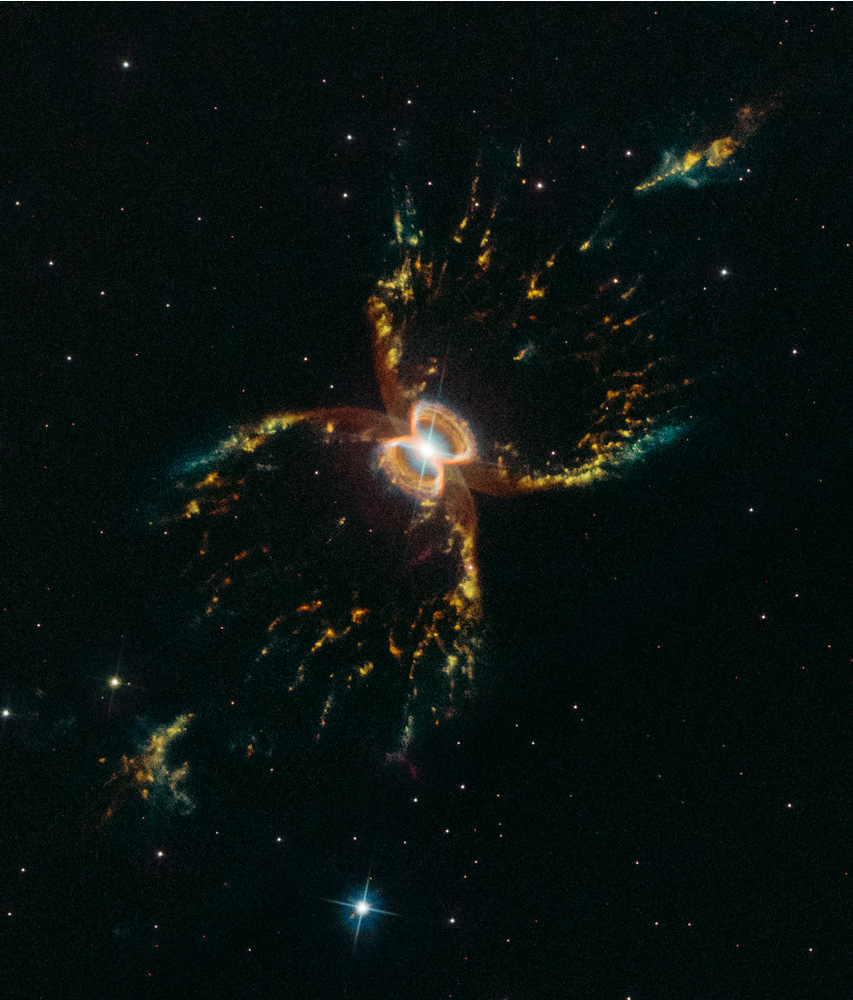
The symmetric, multi-legged appearance of the Southern Crab Nebula is certainly distinctive. About 7,000 light-years distant toward the southern sky constellation Centaurus, its glowing nested hourglass shapes are produced by the remarkable symbiotic binary star system at its center. The nebula's dramatic stellar duo consists of a hot white dwarf star and cool, pulsating red giant star shedding outer layers that fall onto the smaller, much hotter companion. Embedded in a disk of material, outbursts from the white dwarf cause an outflow of gas driven away both above and below the disk resulting in the bipolar hourglass shapes. The bright central shape is about half a light-year across. This new Hubble Space Telescope image celebrates the 29th anniversary of Hubble's launch on April 24, 1990 on board the Space Shuttle Discovery.