False Color
A method of representing data where colors are assigned to specific ranges of values, often used in astronomical imaging to visualize wavelengths outside the visible spectrum.
Source: earthobservatory.nasa.gov
APODs including "False Color"
The Eagle Nebula in Infrared
11/01/2007
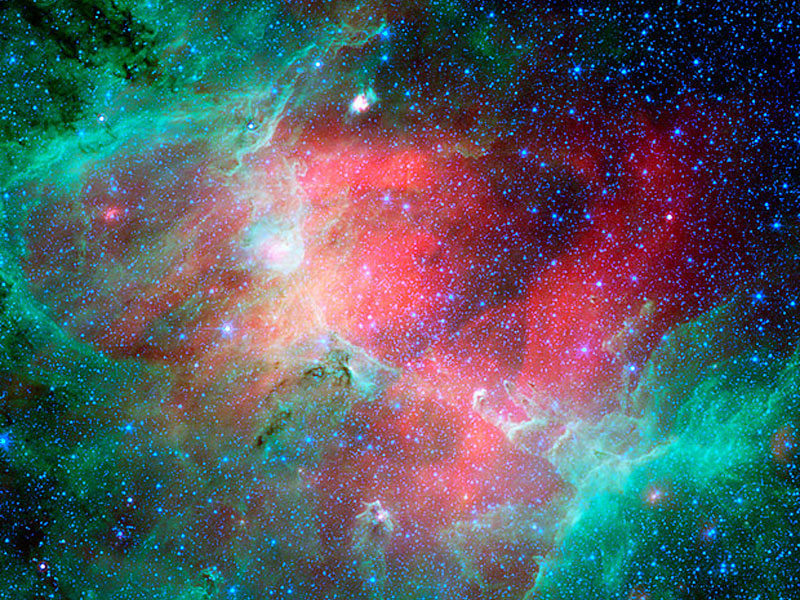
In visible light, the whole thing looks like an eagle. The region was captured recently in unprecedented detail in infrared light by the robotic orbiting Spitzer Space Telescope (SSC). Shown above, the infrared image allows observers to peer through normally opaque dust and so better capture the full complexity of the Eagle Nebula star forming region. In particular, the three famous pillars near the image center are seen bathed in dust likely warmed by a supernova explosion. The warm dust is digitally assigned the false color of red. Also visible, near the bottom of the image, is ten light-year long pillar sometimes dubbed the Fairy of Eagle Nebula. The greater Eagle emission nebula, tagged M16, lies about 6500 light years away, spans about 20 light-years, and is visible with binoculars toward the constellation of Serpens.