Gale Crater
Gale Crater is a 154-kilometer-wide impact basin on Mars that contains a central mound of layered sediments known as Mount Sharp. It was selected as the landing site for NASA's Curiosity rover due to its potential to preserve organic molecules and other signs of past life.
Source: science.nasa.gov
APODs including "Gale Crater"
Dusty With a Chance of Dust
16/06/2018
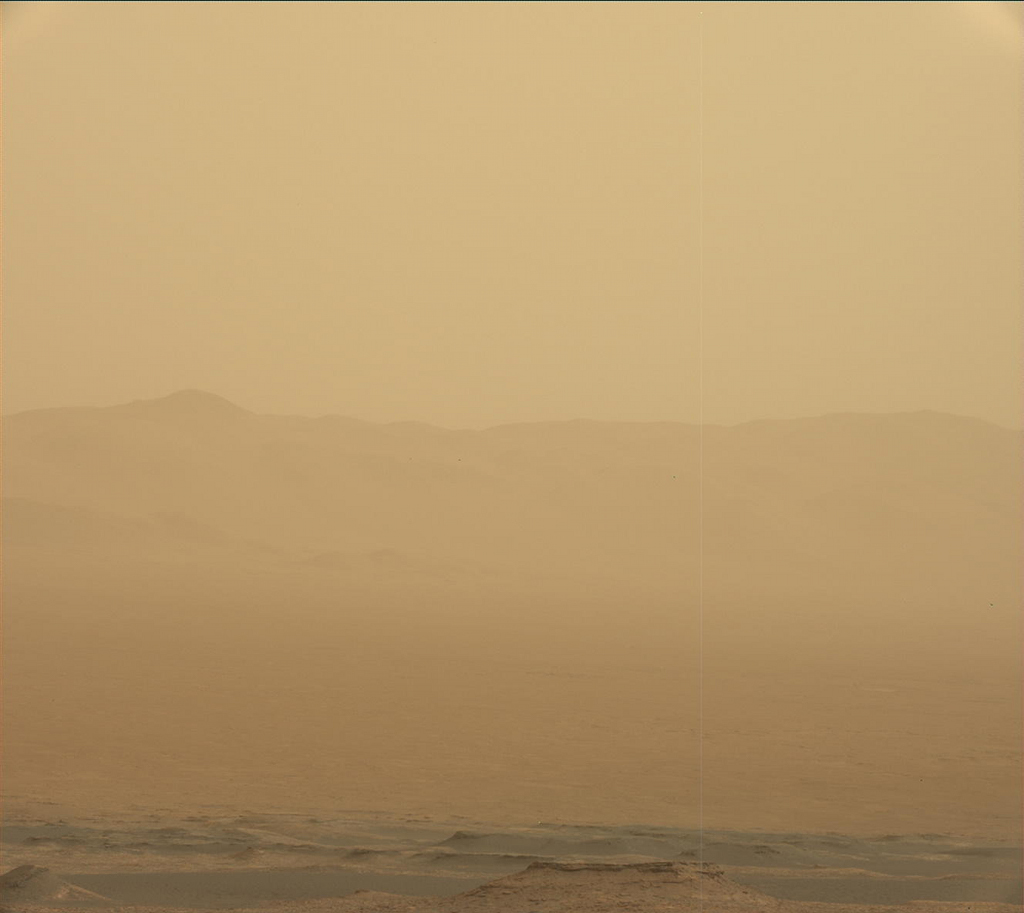
It's storm season on Mars. Dusty with a chance of dust is the weather report for Gale crater as a recent planet-scale dust storm rages. On June 10 looking toward the east-northeast crater rim about 30 kilometers away, the Curiosity rover's Mastcam captured this image of its local conditions so far. Meanwhile over 2,000 kilometers away, the Opportunity rover ceased science operations as the storm grew thicker at its location on the west rim of Endeavour crater, and has stopped communicating, waiting out the storm for now. Curiosity is powered by a radioisotope thermoelectric generator, but the smaller Opportunity rover uses solar panels to charge its batteries. For Opportunity, the increasingly severe lack of sunlight has caused its batteries to run low.