Hubble Space Telescope
A space-based observatory launched in 1990 by NASA and ESA, providing high-resolution images of astronomical objects in visible, ultraviolet, and near-infrared light.
Source: nasa.gov
APODs including "Hubble Space Telescope"
In the Heart of the Tarantula Nebula
20/05/2018
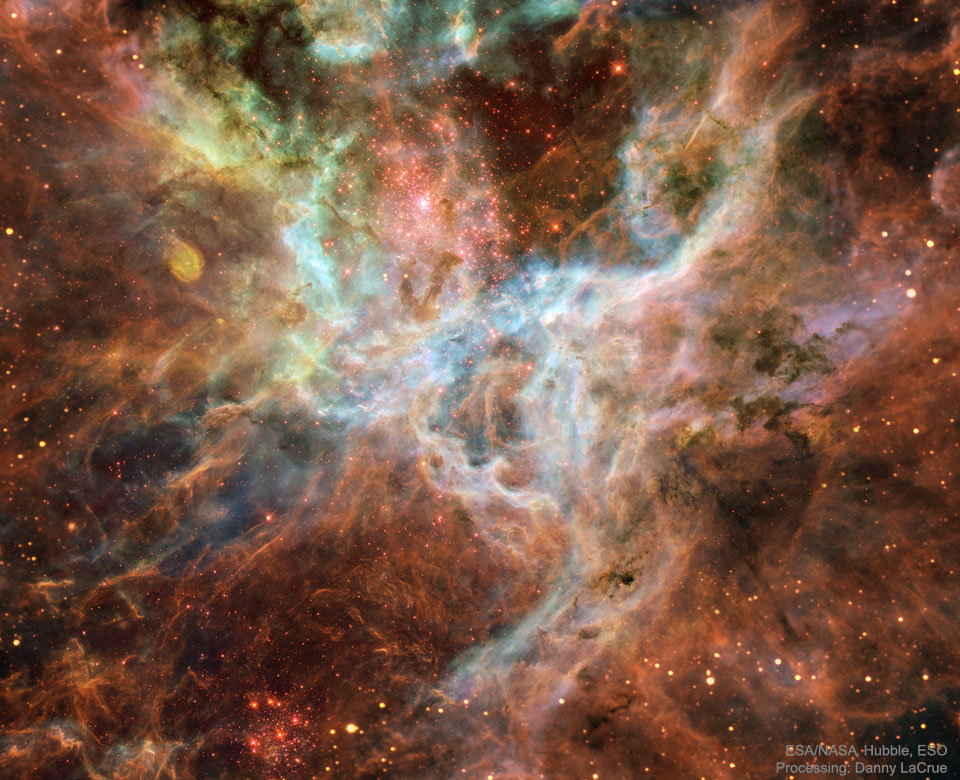
In the heart of monstrous Tarantula Nebula lies huge bubbles of energetic gas, long filaments of dark dust, and unusually massive stars. In the center of this heart, is a knot of stars so dense that it was once thought to be a single star. This star cluster, labeled as R136 or NGC 2070, is visible just above the center of the featured image and home to a great number of hot young stars. The energetic light from these stars continually ionizes nebula gas, while their energetic particle wind blows bubbles and defines intricate filaments. The representative-color picture, a digital synthesis of images from the NASA/ESA orbiting Hubble Space Telescope and ESO's ground-based New Technology Telescope, shows great details of the LMC nebula's tumultuous center. The Tarantula Nebula, also known as the 30 Doradus nebula, is one of the largest star-formation regions known, and has been creating unusually strong episodes of star formation every few million years.