International Space Station
The International Space Station (ISS) is a modular space laboratory in low Earth orbit, jointly operated by NASA, Roscosmos, ESA, JAXA, and CSA. Launched beginning in 1998, it has been continuously inhabited since November 2000 and supports cutting-edge research in microgravity, Earth observation, and space technology, while fostering international cooperation.
Source: nasa.gov
APODs including "International Space Station"
Atlantis to Orbit
23/07/2001
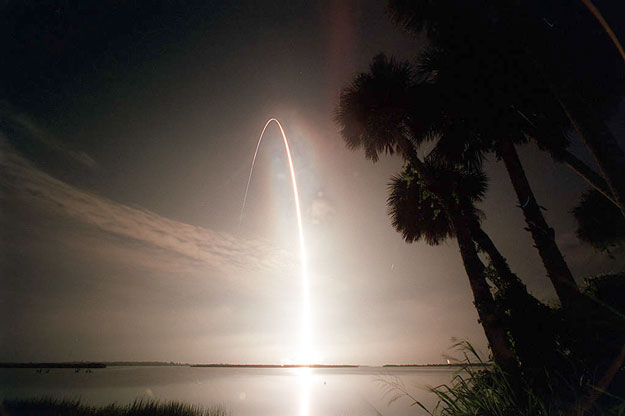
Birds don't fly this high. Airplanes don't go this fast. The Statue of Liberty weighs less. No species other than human can even comprehend what is going on, nor could any human just a millennium ago. The launch of a rocket bound for space is an event that inspires awe and challenges description. Pictured above, the Space Shuttle Atlantis lifted off to visit the International Space Station during the early morning hours of July 12. From a standing start, the two million kilogram rocket ship left to circle the Earth where the outside air is too thin to breathe and where there is little noticeable onboard gravity. Rockets bound for space are now launched from somewhere on Earth about once a week.