International Space Station
The International Space Station (ISS) is a modular space laboratory in low Earth orbit, jointly operated by NASA, Roscosmos, ESA, JAXA, and CSA. Launched beginning in 1998, it has been continuously inhabited since November 2000 and supports cutting-edge research in microgravity, Earth observation, and space technology, while fostering international cooperation.
Source: nasa.gov
APODs including "International Space Station"
The Southern Sky from the International Space Station
07/05/2003
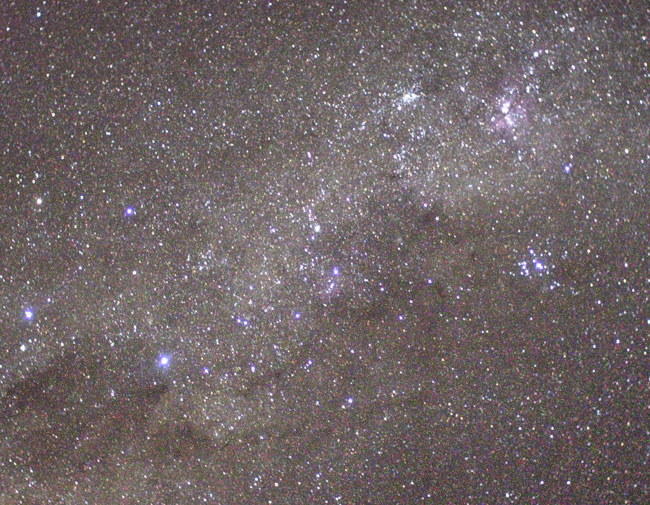
Look up from Earth's South Pole, and this stellar starscape is what you might see. Alternatively, this patch of sky is also visible from many southern locations as well as the orbiting International Space Station, where the above image was recently recorded. To the left of the photograph's center are the four stars that mark the boundaries of the famous Southern Cross. The band of stars, dust, and gas crossing the middle of the photograph is part our Milky Way Galaxy. At the lower left is the dark Coal Sack Nebula, and the bright nebula on the far right is the Carina Nebula. The Southern Cross is such a famous constellation that it is depicted on the national flag of Australia.