International Space Station
The International Space Station (ISS) is a modular space laboratory in low Earth orbit, jointly operated by NASA, Roscosmos, ESA, JAXA, and CSA. Launched beginning in 1998, it has been continuously inhabited since November 2000 and supports cutting-edge research in microgravity, Earth observation, and space technology, while fostering international cooperation.
Source: nasa.gov
APODs including "International Space Station"
Atlantis on Pad 39A
09/02/2008
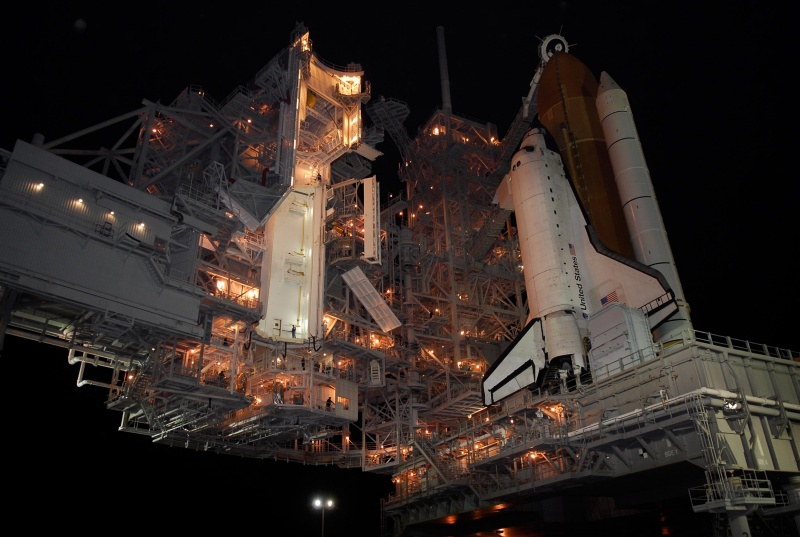
An intricate network of lighting plays across the 130 foot high Rotating Service Structure (RSS) in this dramatic night view of the Space Shuttle Atlantis on the Kennedy Space Center's launch pad 39A. Small human figures visible in silhouette emphasize the structure's enormous scale. Seen here after rolling back before Thursday's shuttle launch, the RSS provides pre-launch access to the orbiter and its payload. For this mission to the International Space Station, STS-122, Atlantis' payload is the European Space Agency's Columbus science laboratory. During the mission, three space walks are planned to attach the Columbus lab. Atlantis is expected to dock with the space station today.