International Space Station
The International Space Station (ISS) is a modular space laboratory in low Earth orbit, jointly operated by NASA, Roscosmos, ESA, JAXA, and CSA. Launched beginning in 1998, it has been continuously inhabited since November 2000 and supports cutting-edge research in microgravity, Earth observation, and space technology, while fostering international cooperation.
Source: nasa.gov
APODs including "International Space Station"
Night Launch of the Space Shuttle Endeavour
09/02/2010
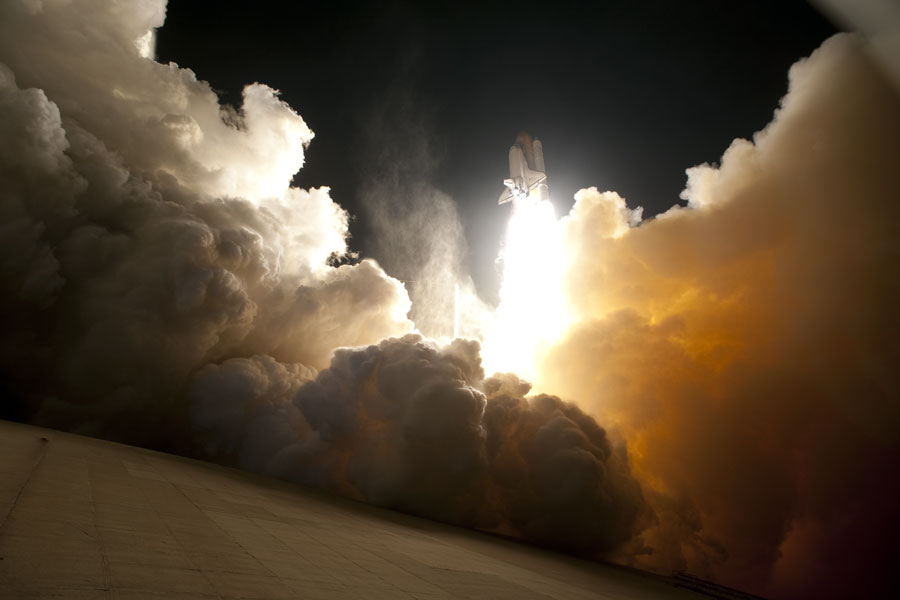
Sometimes, the space shuttle launches at night. Pictured above, the space shuttle Endeavour lifted off in yesterday's early morning hours from Launch Pad 39A in Kennedy Space Center, Florida, USA, bound for the International Space Station (ISS). A night launch, useful for reaching the space station easily during some times of the year, frequently creates vivid launch imagery. The shuttle, as pictured above, is framed by an enormous but typical exhaust plume ejected as the shuttle's powerful rockets began lifting the two million kilogram space bus into Earth orbit. Endeavour's mission, labeled STS-130, includes the delivery of the Tranquility module to the space station. Tranquility will provide extra room for space station astronauts and includes a large circular set of windows designed to bestow vastly improved views of the Earth, the night sky, and the space station itself.