International Space Station
The International Space Station (ISS) is a modular space laboratory in low Earth orbit, jointly operated by NASA, Roscosmos, ESA, JAXA, and CSA. Launched beginning in 1998, it has been continuously inhabited since November 2000 and supports cutting-edge research in microgravity, Earth observation, and space technology, while fostering international cooperation.
Source: nasa.gov
APODs including "International Space Station"
Interior View
23/01/2015
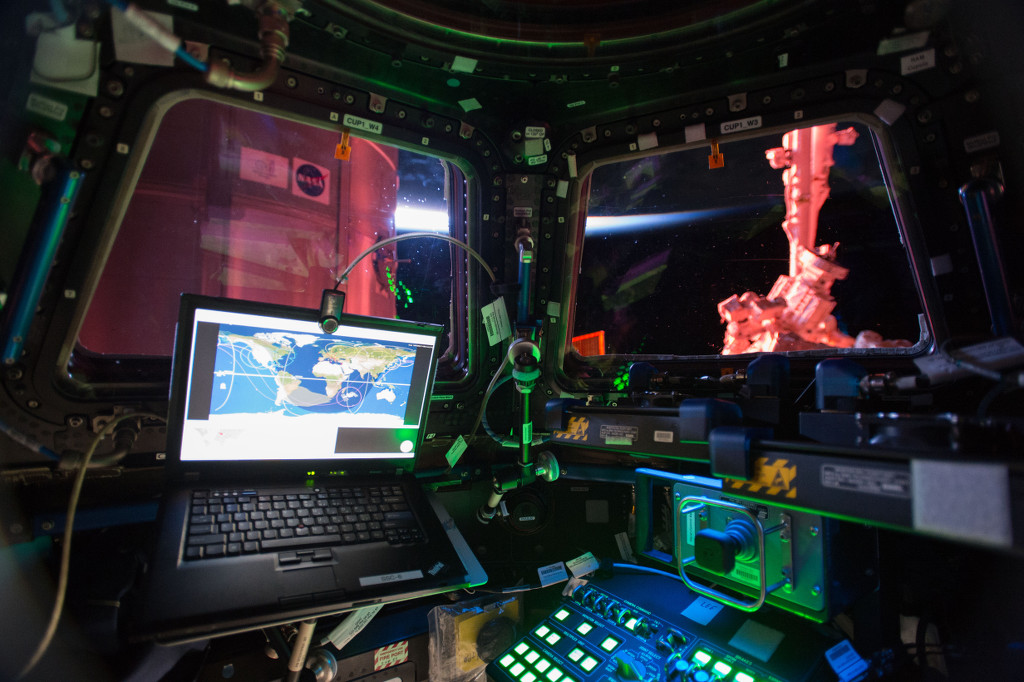
Some prefer windows, and these are the best available on board the International Space Station. Taken on January 4, this snapshot from inside the station's large, seven-window Cupola module also shows off a workstation for controlling Canadarm2. Used to grapple visiting cargo vehicles and assist astronauts during spacewalks, the robotic arm is just outside the window at the right. The Cupola itself is attached to the Earth-facing or nadir port of the station's Tranquility module, offering dynamic panoramas of our fair planet. Seen from the station's 90 minute long, 400 kilometer high orbit, Earth's bright limb is in view above center.