James Webb Space Telescope
Launched in 2021, JWST is a space telescope developed by NASA, ESA, and CSA, designed to observe the universe in infrared wavelengths, enabling the study of the early universe, star formation, and planetary systems.
Source: nasa.gov
APODs including "James Webb Space Telescope"
The Mountains of NGC 2174
16/01/2021
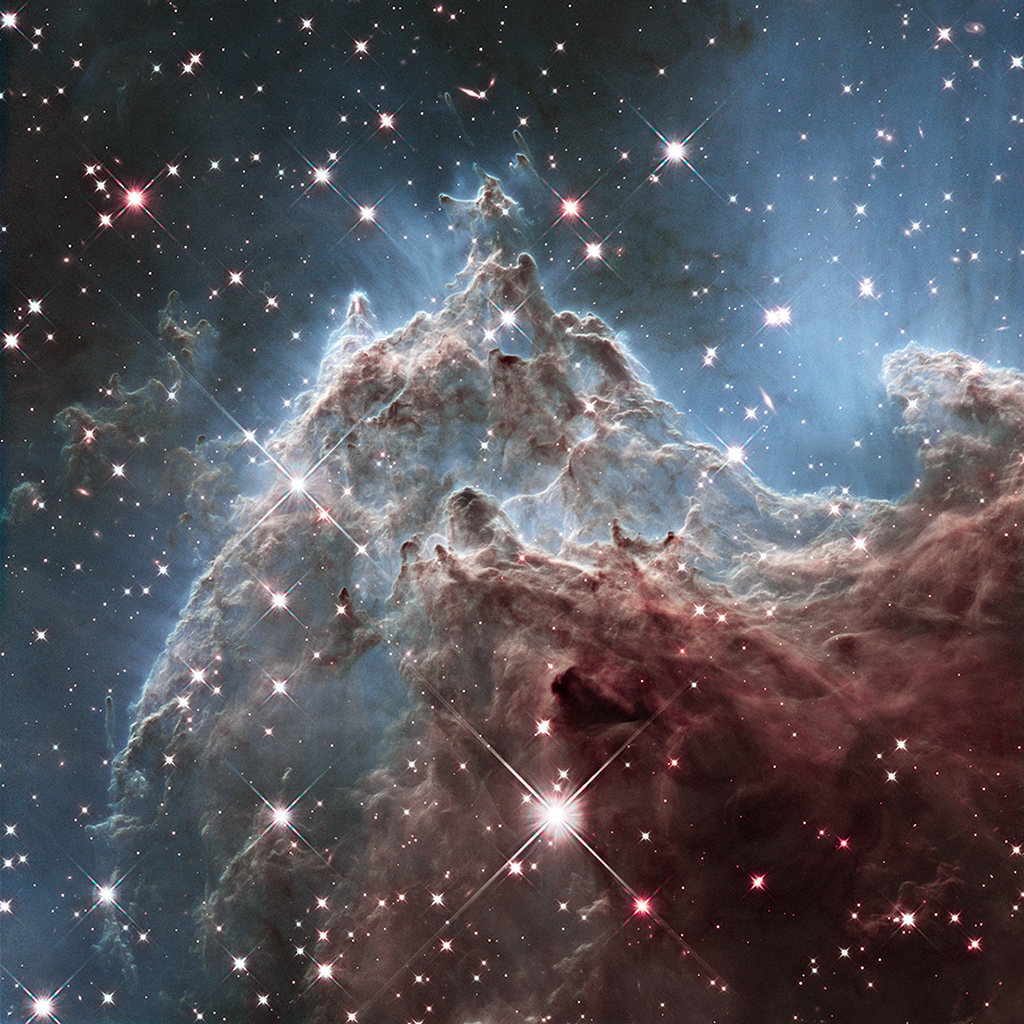
This fantastic skyscape lies near the edge of NGC 2174 a star forming region about 6,400 light-years away in the nebula-rich constellation of Orion. It follows mountainous clouds of gas and dust carved by winds and radiation from the region's newborn stars, now found scattered in open star clusters embedded around the center of NGC 2174, off the top of the frame. Though star formation continues within these dusty cosmic clouds they will likely be dispersed by the energetic newborn stars within a few million years. Recorded at infrared wavelengths by the Hubble Space Telescope in 2014, the interstellar scene spans about 6 light-years. Scheduled for launch in 2021, the James Webb Space Telescope is optimized for exploring the Universe at infrared wavelengths.