James Webb Space Telescope
Launched in 2021, JWST is a space telescope developed by NASA, ESA, and CSA, designed to observe the universe in infrared wavelengths, enabling the study of the early universe, star formation, and planetary systems.
Source: nasa.gov
APODs including "James Webb Space Telescope"
Young Star Cluster NGC 1333
12/09/2024
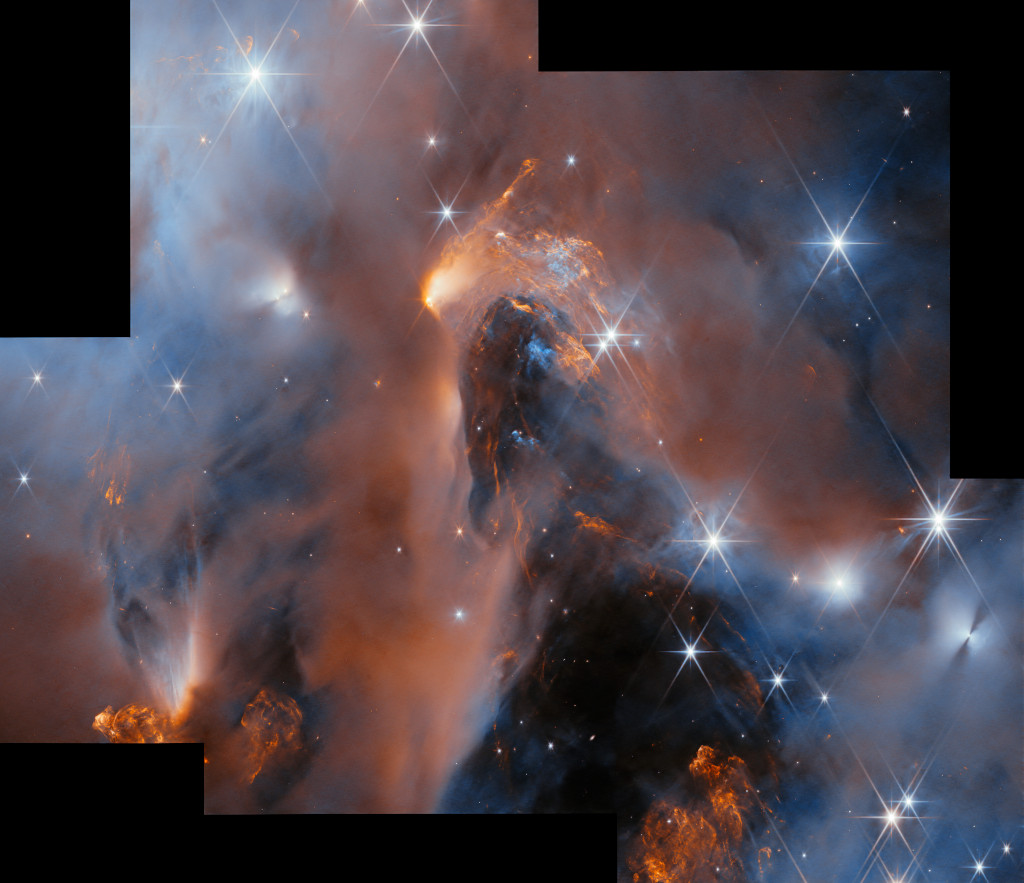
This spectacular mosaic of images from the James Webb Space Telescope peers into the heart of young star cluster NGC 1333. A mere 1,000 light-years distant toward the heroic constellation Perseus, the nearby star cluster lies at the edge of the large Perseus molecular cloud. Part of Webb's deep exploration of the region to identify low mass brown dwarf stars and free floating planets, the space telescope's combined field of view spans nearly 2 light-years across the dusty cluster's turbulent stellar nursery. In fact, NGC 1333 is known to harbor stars less than a million years old, though most are hidden from optical telescopes by the pervasive stardust. The chaotic environment may be similar to one in which our own Sun formed over 4.5 billion years ago.