Lunar Reconnaissance Orbiter
The Lunar Reconnaissance Orbiter (LRO) is a NASA robotic spacecraft launched on June 18, 2009. It operates in a low polar orbit around the Moon and is mapping the lunar surface in unprecedented detail, measuring topography, radiation, temperature, and resources. Its data help identify safe landing sites, locate water ice in shadowed regions, and support future human and robotic exploration.
Source: science.nasa.gov
APODs including "Lunar Reconnaissance Orbiter"
Shackleton from ShadowCam
05/05/2023
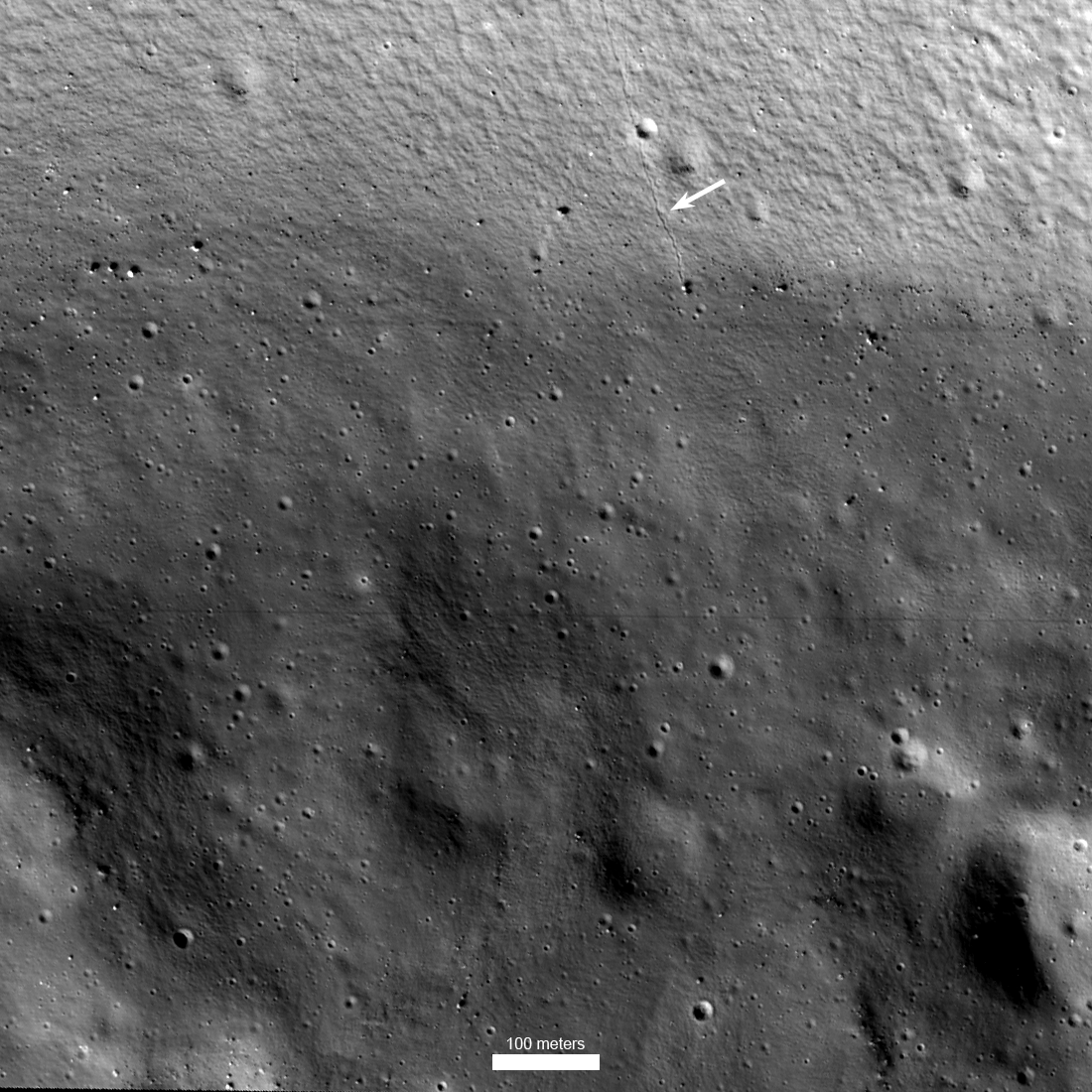
Shackleton crater lies at the lunar south pole. Peaks along the rim of the 21 kilometer diameter crater are in sunlight, but Shackleton's floor is in dark permanent shadow. Still, this image of the shadowed rim wall and floor of Shackleton crater was captured from NASA's ShadowCam, an instrument on board the Korea Pathfinder Lunar Orbiter (KPLO) launched in August 2022. About 200 times more sensitive than, for example, the Lunar Reconnaissance Orbiter's Narrow Angle Camera, ShadowCam was designed to image the permanently shadowed regions of the lunar surface. Avoiding direct sunlight, those regions are expected to be reservoirs of water-ice and other volatiles deposited by ancient cometary impacts and useful to future Moon missions. Of course, the permanently shadowed regions are still illuminated by reflections of sunlight from nearby lunar terrain. In this stunningly detailed ShadowCam image, an arrow marks the track made by a single boulder rolling down Shackleton crater's wall. The image scale is indicated at the bottom of the frame.