Mars
Mars is the fourth planet from the Sun and the seventh largest in the Solar System. A cold, dusty desert world with a thin atmosphere (mostly CO₂), the planet features extinct volcanoes, deep canyons, polar ice caps, and seasons. Mars has two small moons (Phobos and Deimos), a day just over 24 hours long, and a year lasting about 687 Earth days. It is a prime focus of robotic exploration and studies about past water and habitability.
Source: science.nasa.gov
APODs including "Mars"
20 Years Ago: Vikings on Mars
20/07/1996
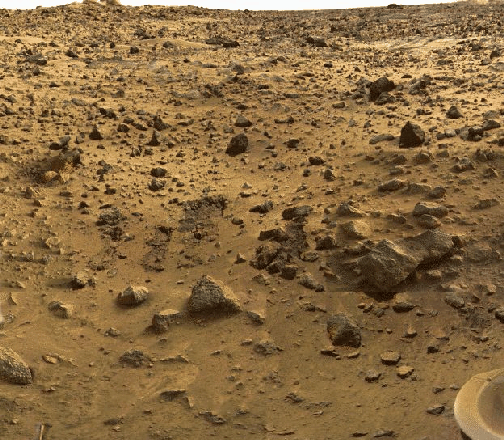
On July 20, 1976, NASA's Viking 1 lander become the first spacecraft to land on Mars, followed weeks later by its twin robot explorer, the Viking 2 lander. Operating on the Martian surface into the early 1980s, the Vikings took thousands of pictures, conducted sophisticated chemical searches for life and studied the Martian weather and geology. In the dramatically detailed image above, a field of rocks and boulders is viewed from the Viking 1 landing sight on Chryse Planitia (the Plain of Chryse). Viking 1's dusty foot pad is just visible at the lower right. The image was created by combining high resolution black and white images with lower resolution color images of the same area. NASA is planning to continue its extremely productive and well chronicled exploration of the mysterious Red Planet with the Mars Global Surveyor and the Mars Pathfinder missions. What's Mars like today?