Mars
Mars is the fourth planet from the Sun and the seventh largest in the Solar System. A cold, dusty desert world with a thin atmosphere (mostly CO₂), the planet features extinct volcanoes, deep canyons, polar ice caps, and seasons. Mars has two small moons (Phobos and Deimos), a day just over 24 hours long, and a year lasting about 687 Earth days. It is a prime focus of robotic exploration and studies about past water and habitability.
Source: science.nasa.gov
APODs including "Mars"
Utopia on Mars
22/07/1996
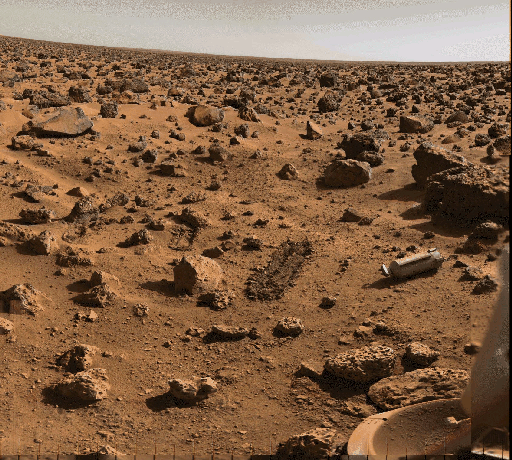
The Viking 2 spacecraft was launched on the Road to Utopia in September of 1975 (30 years after Bing, Dotty, and Bob). In August of 1976, after making the second successful Martian landing, Viking 2's lander began recording data used to produce this exquisitely detailed image of the Martian surface in the area of Utopia Planitia (the Plain of Utopia). Visible at the lower right are the protective shroud that covered the lander's soil collector head, ejected after the descent, along with one of the lander's dust covered footpads. Seen near the center are shallow trenches dug by the sampler arm. Mars looks red because its surface is covered with reddish iron oxide dust (rust). This dust, suspended in the thin carbon dioxide atmosphere, also filters the sunlight causing surface views to take on a reddish tinge. The Vikings made the first successful landings on Mars 20 years ago. What does Mars look like today?