Mars
Mars is the fourth planet from the Sun and the seventh largest in the Solar System. A cold, dusty desert world with a thin atmosphere (mostly CO₂), the planet features extinct volcanoes, deep canyons, polar ice caps, and seasons. Mars has two small moons (Phobos and Deimos), a day just over 24 hours long, and a year lasting about 687 Earth days. It is a prime focus of robotic exploration and studies about past water and habitability.
Source: science.nasa.gov
APODs including "Mars"
Dog-Bone Shaped Asteroid 216 Kleopatra
10/05/2000
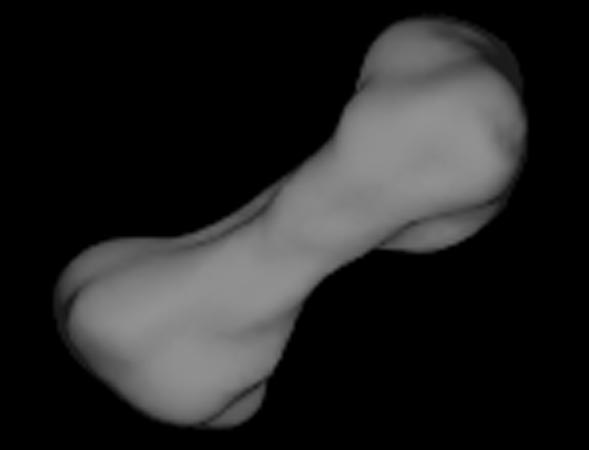
An asteroid the size of New Jersey that orbits the Sun between Mars and Jupiter has been discovered to have an unusual dog-bone shape. Asteroid 216 Kleopatra, recently mapped with Earth-based radar, reflects radio waves so well that astronomers speculate it is composed mostly of metals such as nickel and iron. The unusual shape and composition of 216 Kleopatra may derive from the central regions of a tremendous collision between larger asteroids billions of years ago. Kleopatra is not completely solid - its surface is loosely consolidated rubble, although its core may contain large solid-metal lodes. Kleopatra will never strike the Earth, but it may one day serve as a valuable source of raw building materials.