Mars
Mars is the fourth planet from the Sun and the seventh largest in the Solar System. A cold, dusty desert world with a thin atmosphere (mostly CO₂), the planet features extinct volcanoes, deep canyons, polar ice caps, and seasons. Mars has two small moons (Phobos and Deimos), a day just over 24 hours long, and a year lasting about 687 Earth days. It is a prime focus of robotic exploration and studies about past water and habitability.
Source: science.nasa.gov
APODs including "Mars"
Opportunity Rockets Toward Mars
22/09/2003
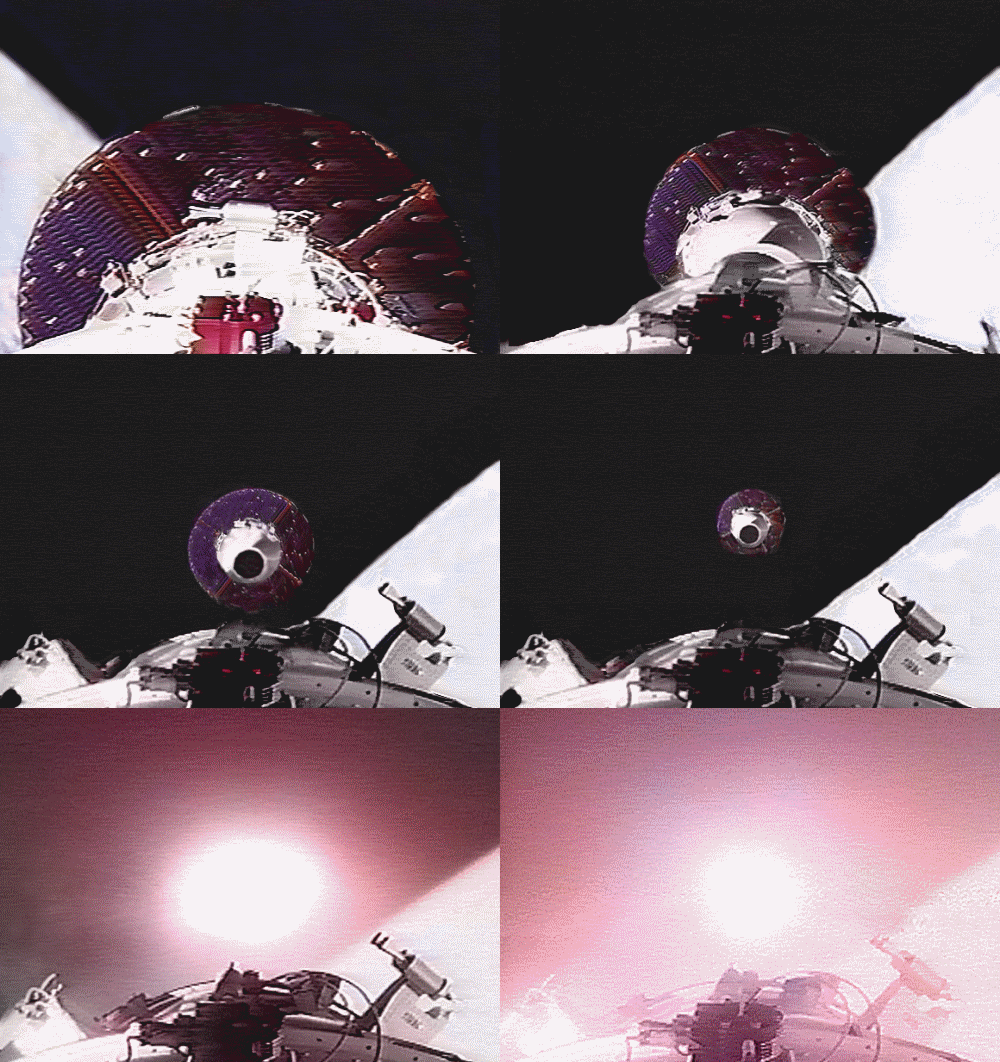
Next stop: Mars. Two months ago, the second of two missions to Mars was launched from Cape Canaveral, Florida, USA above a Boeing Delta II rocket. The Mars Exploration Rover dubbed Opportunity is expected to arrive at the red planet this coming January. Pictured above, an attached RocketCam (TM) captures Opportunity separating from lower booster stages and rocketing off toward Mars. Upon arriving, parachutes will deploy to slow the spacecraft and surrounding airbags will inflate. The balloon-like package will then bounce around the surface a dozen times or more before coming to a stop. The airbags will then deflate, the spacecraft will right itself, and the Opportunity rover will prepare to roll onto Mars. A first rover named Spirit was successfully launched on June 10 and will arrive at Mars a few weeks earlier. The robots Spirit and Opportunity are expected to cover as much as 40 metres per day, much more than Sojourner, their 1997 predecessor. Spirit and Opportunity will search for evidence of ancient Martian water, from which implications might be drawn about the possibility of ancient Martian life.