Mars
Mars is the fourth planet from the Sun and the seventh largest in the Solar System. A cold, dusty desert world with a thin atmosphere (mostly CO₂), the planet features extinct volcanoes, deep canyons, polar ice caps, and seasons. Mars has two small moons (Phobos and Deimos), a day just over 24 hours long, and a year lasting about 687 Earth days. It is a prime focus of robotic exploration and studies about past water and habitability.
Source: science.nasa.gov
APODs including "Mars"
Martian Surface in Perspective
16/01/2004
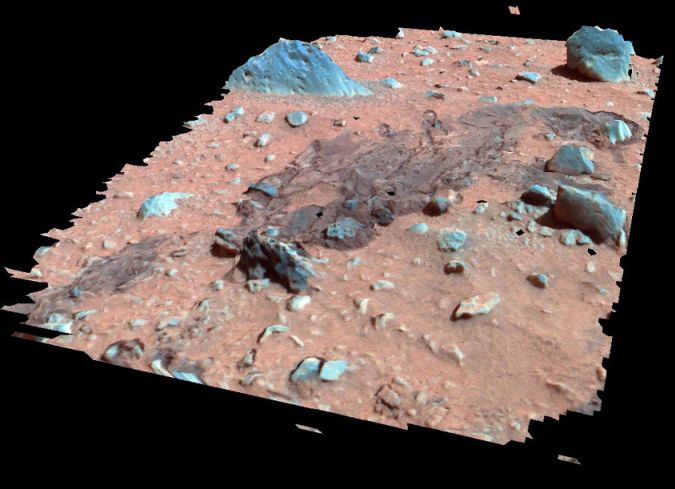
Spirit moved across Mars yesterday as the rover successfully maneuvered down off its lander, driving its six wheels onto the floor of Gusev crater. As planned, the robotic geologist will now begin a close-up examination of the rocks and soil around the landing site for clues to the processes that formed them. A perspective projection of Spirit's local martian rocks and soil is shown above, based on 3D color image data recorded when rover was still perched on its landing platform. Dark-colored airbag drag marks stretch across the soil in this view of the surface. For scale, the triangular-faced rock in the upper left corner is about 20 centimeters (8 inches) high. Scientists anticipate that the rover's investigation will yield valuable evidence helping to confirm or refute the possibility that the floor of Gusev crater is an ancient lake bed.