Mars
Mars is the fourth planet from the Sun and the seventh largest in the Solar System. A cold, dusty desert world with a thin atmosphere (mostly CO₂), the planet features extinct volcanoes, deep canyons, polar ice caps, and seasons. Mars has two small moons (Phobos and Deimos), a day just over 24 hours long, and a year lasting about 687 Earth days. It is a prime focus of robotic exploration and studies about past water and habitability.
Source: science.nasa.gov
APODs including "Mars"
An Unusual Two-Toned Rock on Mars
26/01/2006
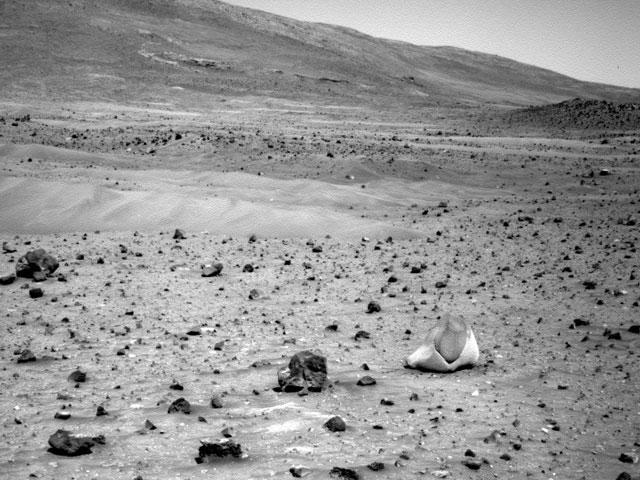
How did this unusual Martian rock form? The atypical two-toned rock, visible in the lower right of the above image, was photographed a few days ago by the robotic Spirit rover currently rolling across Mars. For now, the environmental processes that created the rock remain a matter of speculation. Finding unusual rocks is not unusual for Spirit or its twin rover Opportunity, however. Over the past two years, for example, the rovers have unexpectedly discovered very small gray pebbles dubbed blueberries, and a rock out in the middle of nowhere now thought to be a meteorite. Having investigated alien terrain and having found clear evidence that part of Mars had a wet past, the Earth-launched Martian rovers are now entering their third spectacular year exploring the red planet.