Mars
Mars is the fourth planet from the Sun and the seventh largest in the Solar System. A cold, dusty desert world with a thin atmosphere (mostly CO₂), the planet features extinct volcanoes, deep canyons, polar ice caps, and seasons. Mars has two small moons (Phobos and Deimos), a day just over 24 hours long, and a year lasting about 687 Earth days. It is a prime focus of robotic exploration and studies about past water and habitability.
Source: science.nasa.gov
APODs including "Mars"
White Ridges on Mars
20/02/2007
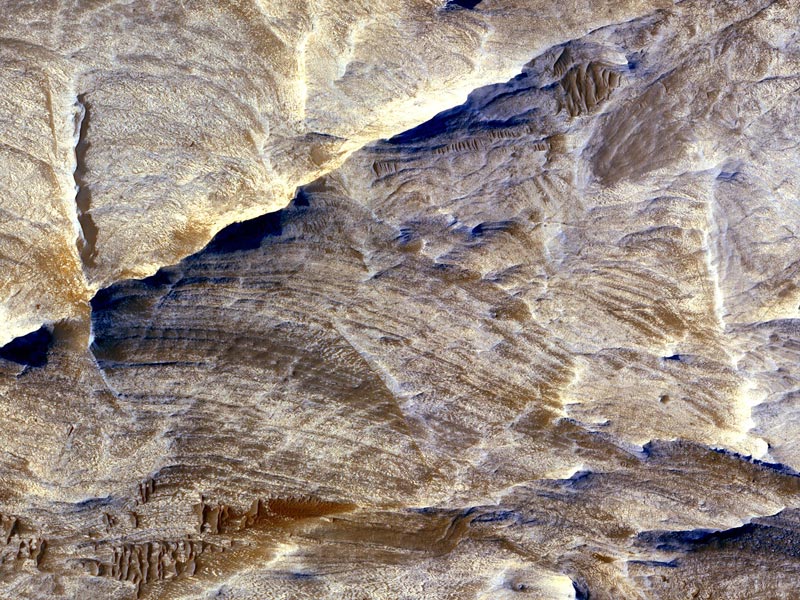
What created these white ridges on Mars? The images showing the white ridges, including some of the highest resolution images ever taken from Martian orbit, were recorded last year by the Mars Reconnaissance Orbiter (MRO). A current leading hypothesis is that the white ridges formed as water flowed through underground cracks and bleached and hardened the edges of surrounding rocks. Over millions of years, surface winds eroded the darker rock leaving the raised white ridges. Such water-created light-colored markings are well known here on Earth. The hypothesis is particularly interesting as underground water could have helped to support microbial life on the red world. The above image resolves surface features as small as one meter across in Candor Chasma region of huge Valles Marineris on Mars.