Mars
Mars is the fourth planet from the Sun and the seventh largest in the Solar System. A cold, dusty desert world with a thin atmosphere (mostly CO₂), the planet features extinct volcanoes, deep canyons, polar ice caps, and seasons. Mars has two small moons (Phobos and Deimos), a day just over 24 hours long, and a year lasting about 687 Earth days. It is a prime focus of robotic exploration and studies about past water and habitability.
Source: science.nasa.gov
APODs including "Mars"
Global Dust Storms Threaten Mars Rovers
25/07/2007
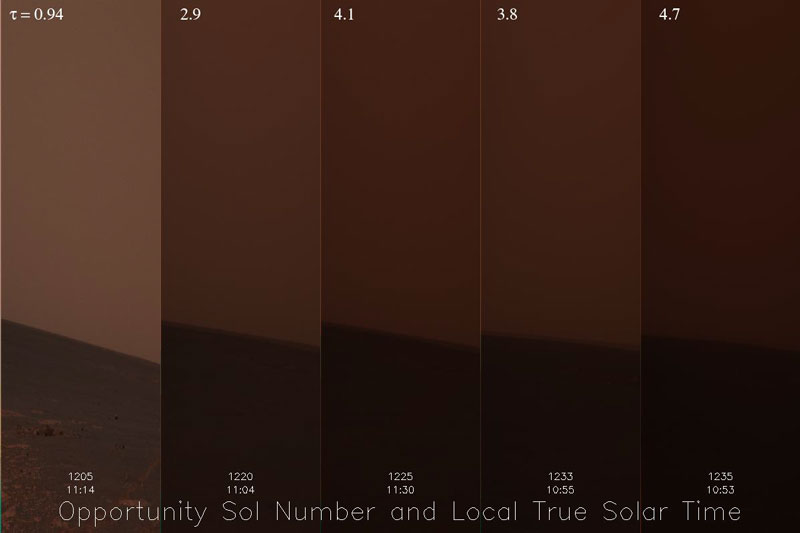
Will global dust storms terminate the robotic Martian rovers? Over the past month, windy dust storms have blocked much needed sunlight from reaching the solar panels of both the Spirit and Opportunity rovers exploring Mars. At times, as much as 99 percent of direct sunlight has been obscured, causing worry that the batteries might run out of energy before the storms end -- which may be as long as weeks. In an effort to weather these storms, Earth controllers have programmed the rovers to restrict movements and to use as little power as possible. Although the rovers have been working for a remarkable three years past their planned three month lifetimes, their immediate future is now uncertain. Pictured above, the Opportunity rover perched on the edge of Victoria Crater peered for a month into the distance as dust made the Martian air increasingly opaque.