Mars
Mars is the fourth planet from the Sun and the seventh largest in the Solar System. A cold, dusty desert world with a thin atmosphere (mostly CO₂), the planet features extinct volcanoes, deep canyons, polar ice caps, and seasons. Mars has two small moons (Phobos and Deimos), a day just over 24 hours long, and a year lasting about 687 Earth days. It is a prime focus of robotic exploration and studies about past water and habitability.
Source: science.nasa.gov
APODs including "Mars"
Possible Mud Volcanoes on Mars
30/03/2009
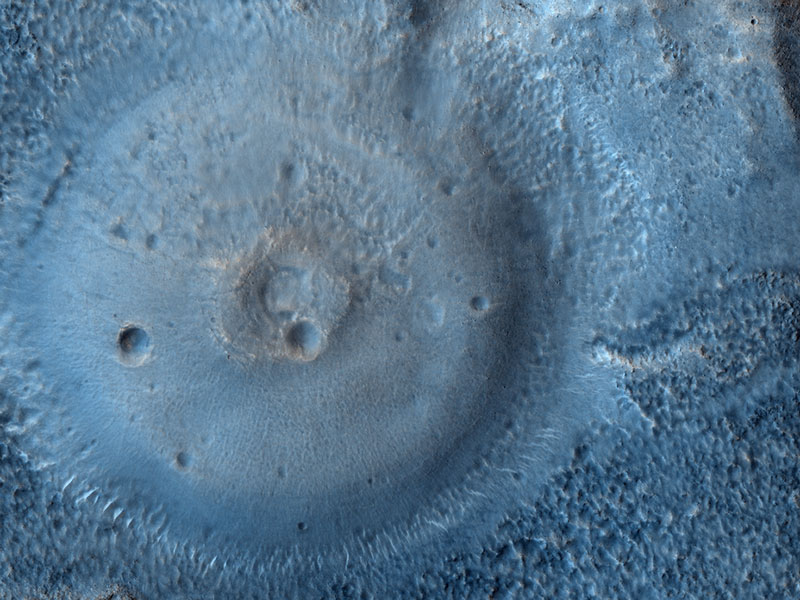
Is this a mud volcano on Mars? If so, could it be dredging up martian microbes? This strange possibility has been suggested recently and seems to fit several recent observations of Mars. First of all, hills like this seem to better resemble mud volcanoes on Earth than lava volcanoes and impact craters on Mars. Next, the pictured dome has an unusually textured surface consistent with fractured ice. Infrared images from space indicate that hills like this cool more quickly than surrounding rock, consistent with a dried mud composition. The hills also reflect colors consistent with a composition that formed in the presence of water. Finally, unusual plumes of gas containing methane have been found on Mars with unknown origin. These gas plumes could conceivably have been liberated by mud volcanoes, were the initially warm mud to contain methane-producing microbes drifting in a previously unobservable underground lake. A candidate mud volcano over 100 meters across is pictured above in the northern plains of Mars.