Mars
Mars is the fourth planet from the Sun and the seventh largest in the Solar System. A cold, dusty desert world with a thin atmosphere (mostly CO₂), the planet features extinct volcanoes, deep canyons, polar ice caps, and seasons. Mars has two small moons (Phobos and Deimos), a day just over 24 hours long, and a year lasting about 687 Earth days. It is a prime focus of robotic exploration and studies about past water and habitability.
Source: science.nasa.gov
APODs including "Mars"
Comanche Outcrop on Mars Indicates Hospitable Past
30/08/2010
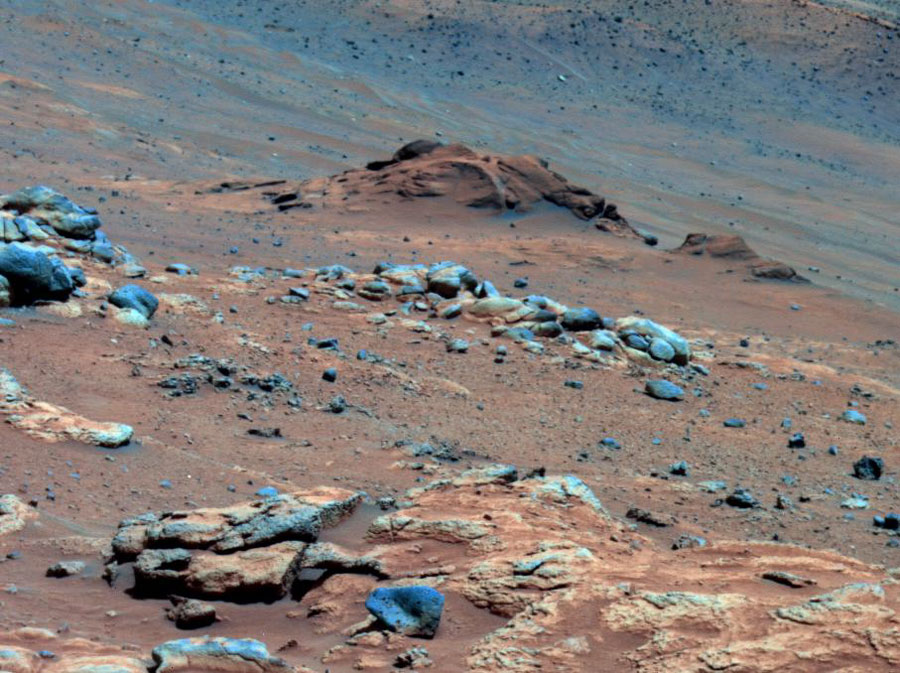
Could life once have survived on Mars? Today, neither animal nor plant life from Earth could survive for very long on Mars because at least one key ingredient -- liquid water -- is essentially absent on the red planet's rusty surface. Although evidence from the martian rovers indicates that long ago Mars might once have had liquid water on its surface, that water might also have been too acidic for familiar life forms to thrive. Recently, however, a newly detailed analysis of an unusual outcropping of rock and soil chanced upon in 2005 by the robotic Spirit rover has uncovered a clue indicating that not all of Mars was always so acidic. The mound in question, dubbed Comanche Outcrop and visible near the top of the above image, appears to contain unusually high concentrations of elements such as magnesium iron carbonate. The above image is shown in colors exaggerated to highlight the differences in composition. Since these carbonates dissolve in acid, the persistence of these mounds indicates that water perhaps less acidic and more favorable for life might have once flowed across Mars. More detailed analyses and searches for other signs will surely continue.