Mars
Mars is the fourth planet from the Sun and the seventh largest in the Solar System. A cold, dusty desert world with a thin atmosphere (mostly CO₂), the planet features extinct volcanoes, deep canyons, polar ice caps, and seasons. Mars has two small moons (Phobos and Deimos), a day just over 24 hours long, and a year lasting about 687 Earth days. It is a prime focus of robotic exploration and studies about past water and habitability.
Source: science.nasa.gov
APODs including "Mars"
Jupiter and Venus from Earth
18/03/2012
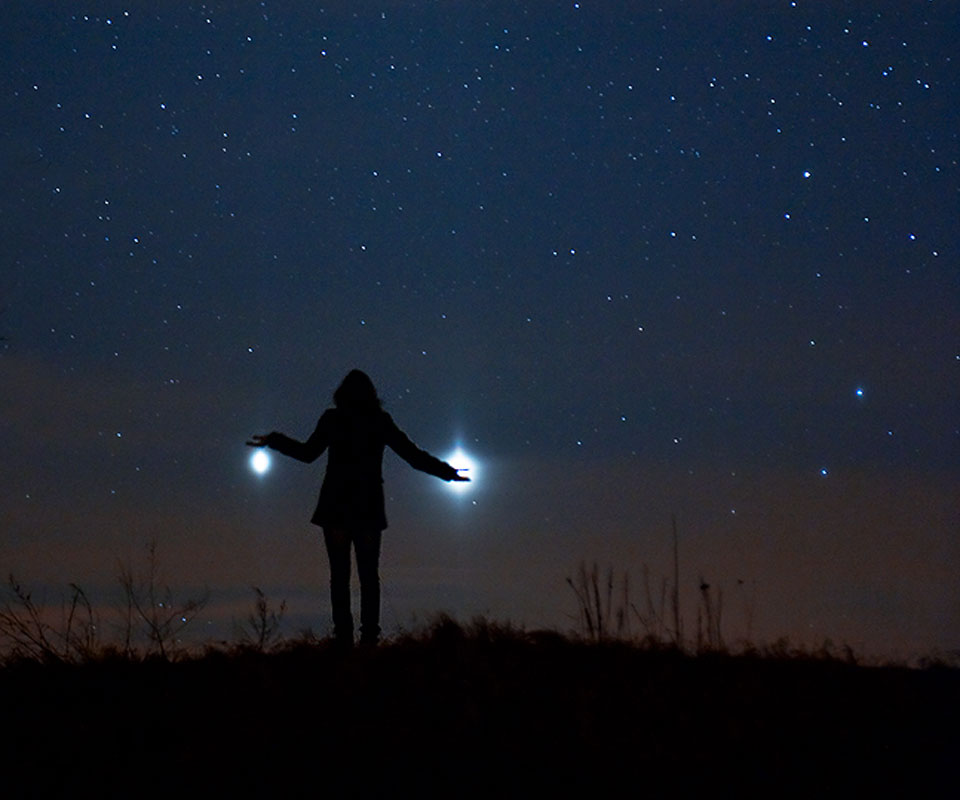
It was visible around the world. The sunset conjunction of Jupiter and Venus was visible last week almost no matter where you lived on Earth. Anyone on the planet with a clear western horizon at sunset could see them. This week the two are still notable, even though Jupiter has sunk below the brighter Venus. And if you look higher in the sky you can see Mars as well. Pictured above, a creative photographer traveled away from the town lights of Szubin, Poland to image a near closest approach of the two planets almost a week ago. The bright planets were separated only by three degrees and his daughter striking a humorous pose. A faint red sunset still glowed in the background. Although this conjunction is drawing to a close, another conjunction between Venus and Jupiter will occur next May. Gallery: See more images of this planetary conjunction from around the world