Mars
Mars is the fourth planet from the Sun and the seventh largest in the Solar System. A cold, dusty desert world with a thin atmosphere (mostly CO₂), the planet features extinct volcanoes, deep canyons, polar ice caps, and seasons. Mars has two small moons (Phobos and Deimos), a day just over 24 hours long, and a year lasting about 687 Earth days. It is a prime focus of robotic exploration and studies about past water and habitability.
Source: science.nasa.gov
APODs including "Mars"
Kenya Morning Moon, Planets, and Taurid
12/11/2015
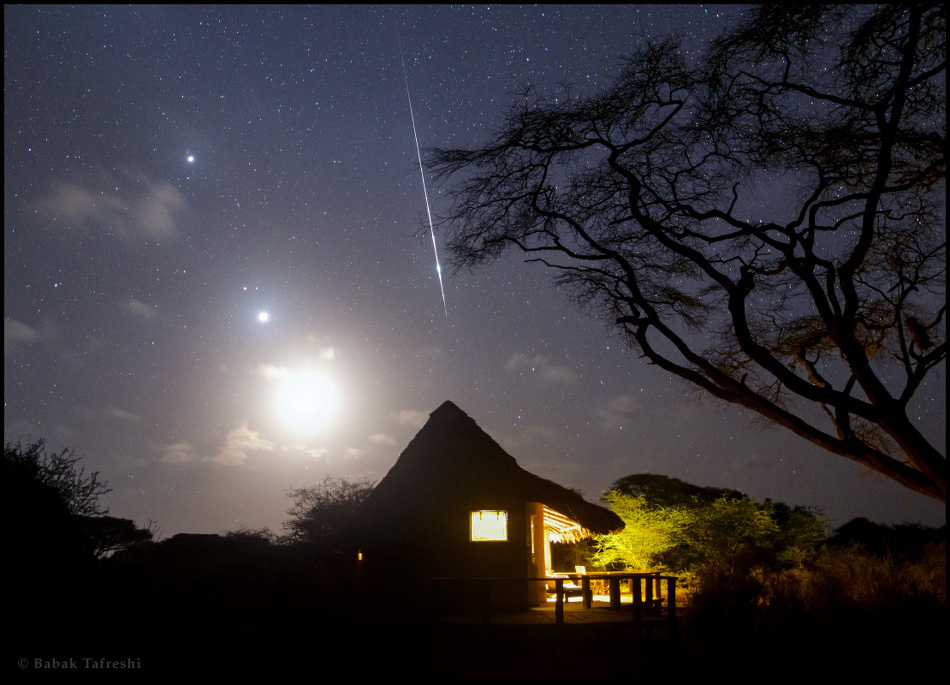
On November 8, a waning crescent Moon joined the continuing parade of planets in Earth's early morning skies. Captured here from Amboseli National Park, Kenya, even the overexposed moonlight can't washout brilliant Venus though, lined up near the ecliptic plane with faint Mars and bright Jupiter above. As if Moon and planets aren't enough, a comparably bright Taurid meteor also streaks through the scene. In fact November's Taurid meteor showers have had a high proportion of bright fireballs. Apparently streaming from radiants in Taurus, the meteors are caused by our fair planet's annual passage through debris from Comet 2P/Encke. The comet's dust grains are catching up with Earth's atmosphere at a relatively low speed of about 27 kilometers per second.