Mars
Mars is the fourth planet from the Sun and the seventh largest in the Solar System. A cold, dusty desert world with a thin atmosphere (mostly CO₂), the planet features extinct volcanoes, deep canyons, polar ice caps, and seasons. Mars has two small moons (Phobos and Deimos), a day just over 24 hours long, and a year lasting about 687 Earth days. It is a prime focus of robotic exploration and studies about past water and habitability.
Source: science.nasa.gov
APODs including "Mars"
Mars Between Nebulas
27/03/2018
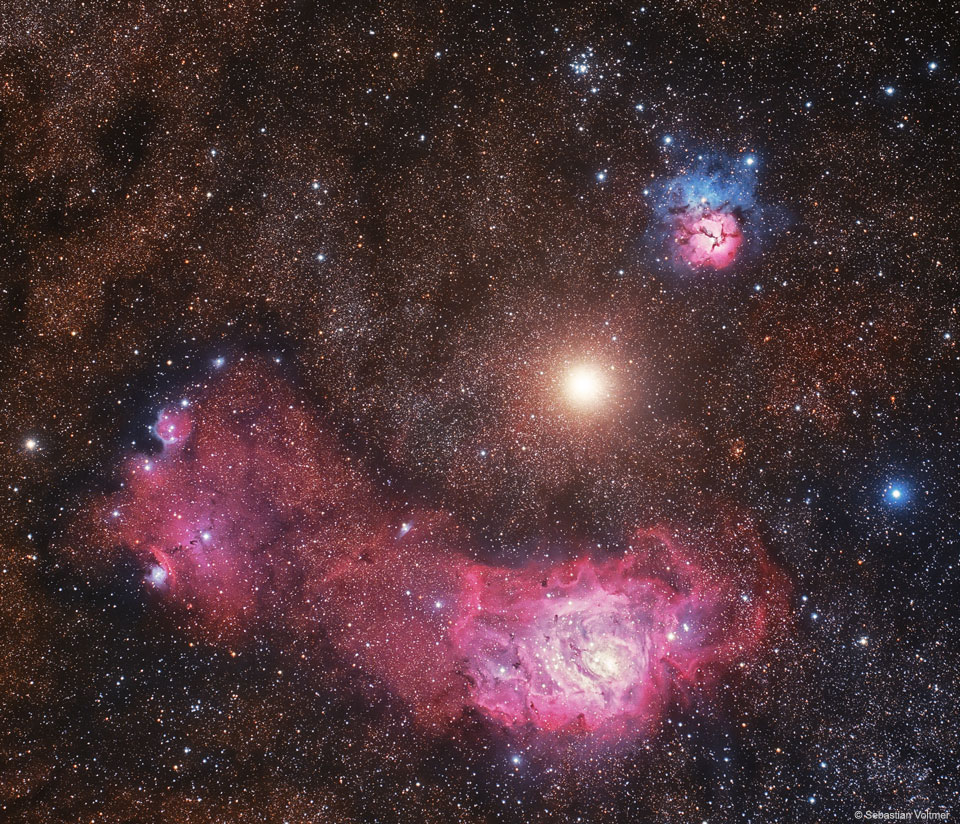
What's that bright red spot between the Lagoon and Trifid Nebulas? Mars. This gorgeous color deep-sky photograph captured the red planet passing between the two notable nebulas -- cataloged by the 18th century cosmic registrar Charles Messier as M8 and M20. M20 (upper right of center), the Trifid Nebula, presents a striking contrast in red/blue colors and dark dust lanes. Across the bottom right is the expansive, alluring red glow of M8, the Lagoon Nebula. Both nebulae are a few thousand light-years distant. By comparison, temporarily situated between them both, is the dominant "local" celestial beacon Mars. Taken last week, the red planet was only about 10 light-minutes away. Gallery: Mars in Sagittarius