Mars
Mars is the fourth planet from the Sun and the seventh largest in the Solar System. A cold, dusty desert world with a thin atmosphere (mostly CO₂), the planet features extinct volcanoes, deep canyons, polar ice caps, and seasons. Mars has two small moons (Phobos and Deimos), a day just over 24 hours long, and a year lasting about 687 Earth days. It is a prime focus of robotic exploration and studies about past water and habitability.
Source: science.nasa.gov
APODs including "Mars"
Countryside Mars and Milky Way
09/06/2018
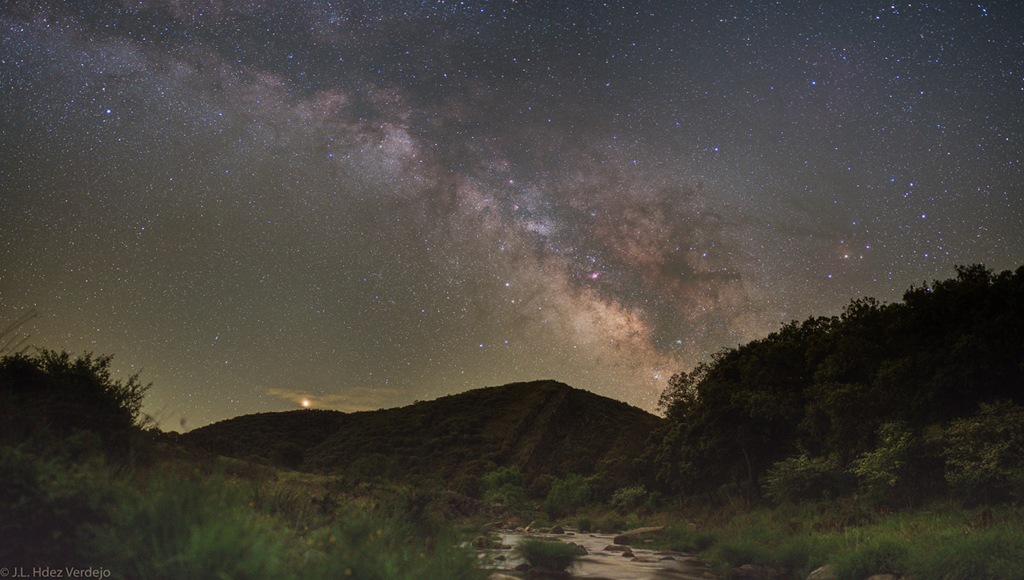
Mars shines brightly now in planet Earth's sky. Seen with a yellowish hue it rises over the hills and far away in this serene night skyscape, a countryside panorama recorded last month from Parque Nacional de Cabaneros in Spain. The Milky Way too extends above the distant hills into a starry sky. Its faint pinkish nebulae, cosmic rifts and rivers of dust are mingled with the pale, diffuse glow of starlight. Mimicking Mars' yellow tint, bright star Antares shines to the right of the central Milky Way starclouds. Of course, CubeSats from Earth are on their way to the Red Planet.