Mars
Mars is the fourth planet from the Sun and the seventh largest in the Solar System. A cold, dusty desert world with a thin atmosphere (mostly CO₂), the planet features extinct volcanoes, deep canyons, polar ice caps, and seasons. Mars has two small moons (Phobos and Deimos), a day just over 24 hours long, and a year lasting about 687 Earth days. It is a prime focus of robotic exploration and studies about past water and habitability.
Source: science.nasa.gov
APODs including "Mars"
A Symphony in Northern Winter Skies
22/03/2019
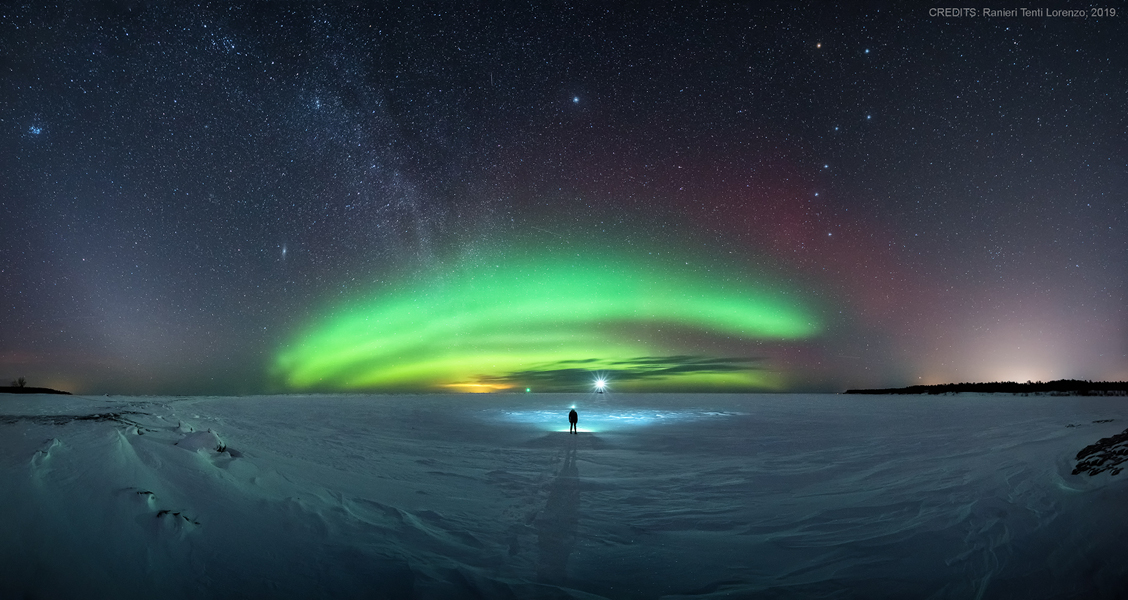
Despite the cold, a chance to view the shimmering northern lights coaxed this skygazer onto the frozen surface of Lake Superior on the west coast of the Keweenaw Peninsula and offered this nocturnal crescendo as a reward. A northern late winter night sky also plays across the panoramic composition of images made between 10pm and 1am on the night of February 28/March 1. At left, a faint band of Zodiacal light rises sharply from the horizon crossing Mars and the Pleides star cluster. Both the distant galaxy M31 and our own Milky Way shine above the greenish auroral arc. Navigational north pole star Polaris is centered above and accompanied on the right by the northern night's most recognizable asterism, the Big Dipper. Terrestrial lights include markers for two breakwaters on the the horizon near the center of the scene.