Mars
Mars is the fourth planet from the Sun and the seventh largest in the Solar System. A cold, dusty desert world with a thin atmosphere (mostly CO₂), the planet features extinct volcanoes, deep canyons, polar ice caps, and seasons. Mars has two small moons (Phobos and Deimos), a day just over 24 hours long, and a year lasting about 687 Earth days. It is a prime focus of robotic exploration and studies about past water and habitability.
Source: science.nasa.gov
APODs including "Mars"
InSight on a Cloudy Day
04/10/2019
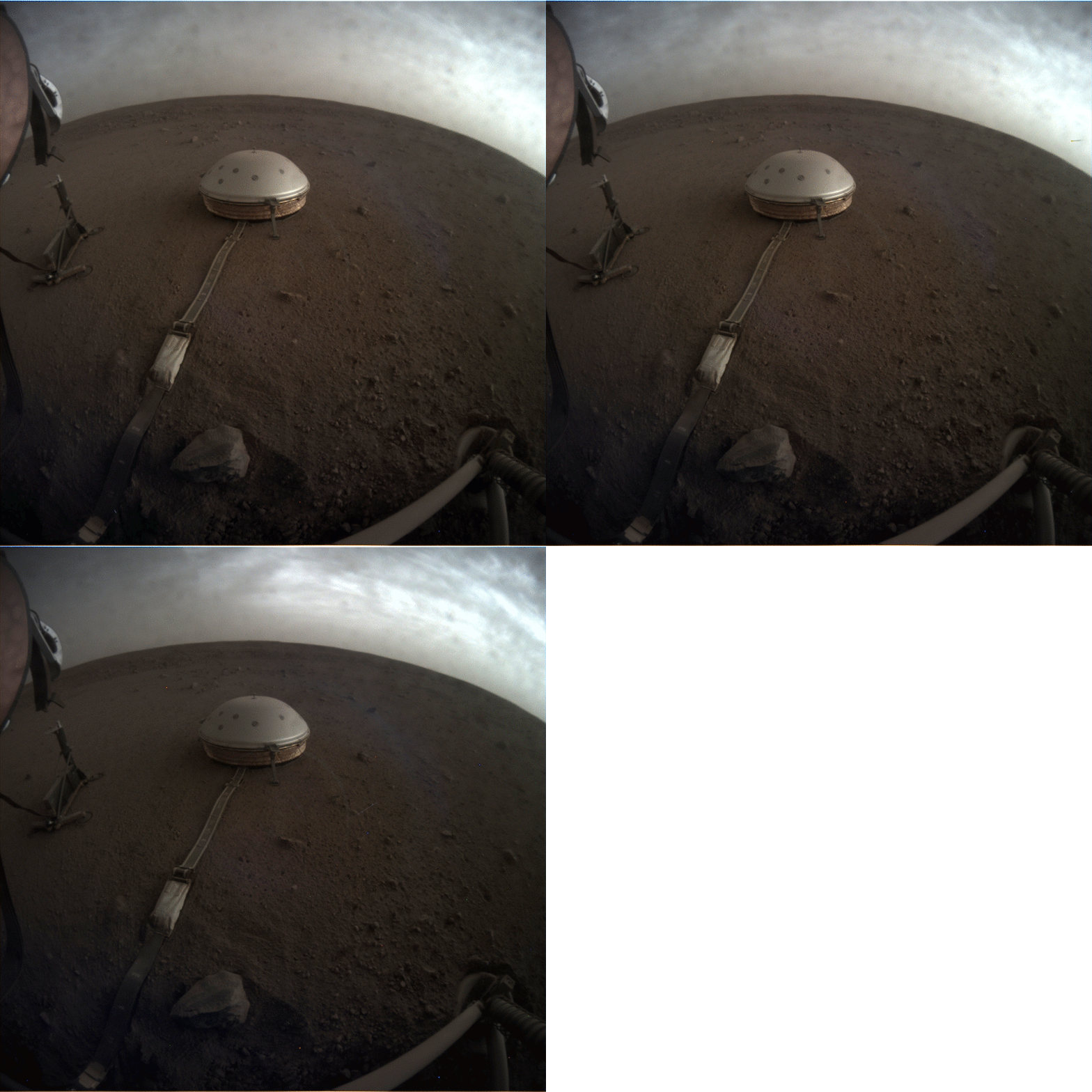
Clouds drift through the sky as the light fades near sunset in this three frame animated gif. The scene was captured on sol 145 beginning around 6:30pm local time by a camera on the Mars InSight lander. Of course, InSight's martian day, sol 145, corresponds to Earth calendar date April 25, 2019. Under the 69 centimeter (2.3 foot) diameter dome in the foreground is the lander's sensitive seismometer SEIS designed to detect marsquakes. Earthquakes reveal internal structures on planet Earth, and so tremors detected by SEIS can explore beneath the martian surface. In particular, two typical marsquakes were recorded by SEIS on May 22 (sol 173) and July 25 (sol 235). The subtle tremors from the Red Planet are at very low frequencies though, and for listening have to be processed into the audio frequency range. In the sped up recordings external noises more prevalent on cool martian evenings and likely caused by mechanical shifts and contractions have been technically dubbed dinks and donks.