Mars
Mars is the fourth planet from the Sun and the seventh largest in the Solar System. A cold, dusty desert world with a thin atmosphere (mostly CO₂), the planet features extinct volcanoes, deep canyons, polar ice caps, and seasons. Mars has two small moons (Phobos and Deimos), a day just over 24 hours long, and a year lasting about 687 Earth days. It is a prime focus of robotic exploration and studies about past water and habitability.
Source: science.nasa.gov
APODs including "Mars"
The Day After Mars
01/11/2019
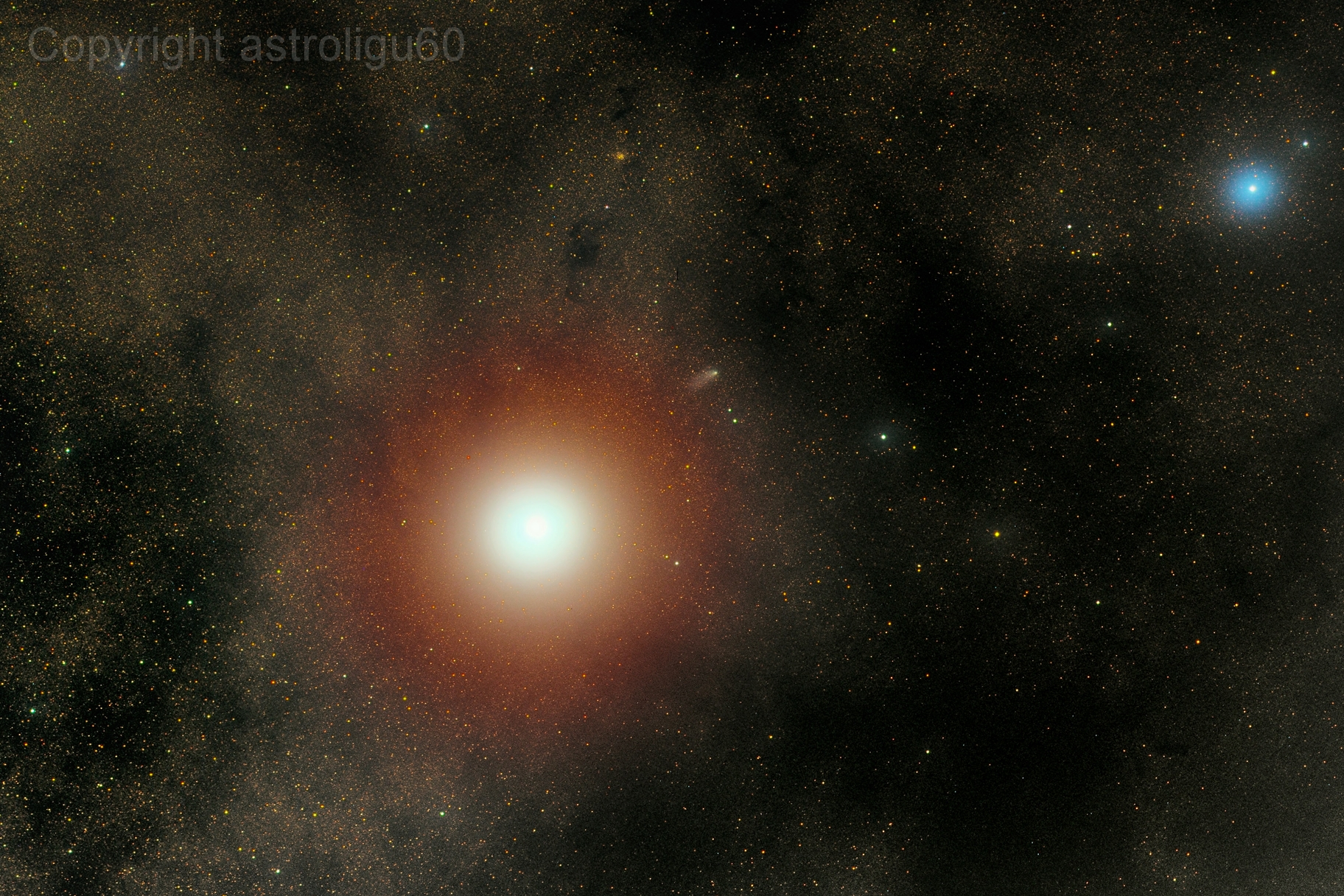
October 31, 1938 was the day after Martians encountered planet Earth, and everything was calm. Reports of the invasion were revealed to be part of a Halloween radio drama, the now famous broadcast based on H.G. Wells' scifi novel War of the Worlds. On Mars October 20, 2014 was calm too, the day after its close encounter with Comet Siding Spring (C/2013 A1). Not a hoax, this comet really did come within 86,700 miles or so of Mars, about 1/3 the Earth-Moon distance. Earth's spacecraft and rovers in Mars orbit and on the surface reported no ill effects though, and had a ringside seat as a visitor from the outer solar system passed by. Spanning over 2 degrees against stars of the constellation Ophiuchus, this colorful telescopic snapshot captures our view of Mars on the day after. Bluish star 51 Ophiuchi is at the upper right and the comet is just emerging from the Red Planet's bright glare.