Mars
Mars is the fourth planet from the Sun and the seventh largest in the Solar System. A cold, dusty desert world with a thin atmosphere (mostly CO₂), the planet features extinct volcanoes, deep canyons, polar ice caps, and seasons. Mars has two small moons (Phobos and Deimos), a day just over 24 hours long, and a year lasting about 687 Earth days. It is a prime focus of robotic exploration and studies about past water and habitability.
Source: science.nasa.gov
APODs including "Mars"
Fear and Dread: The Moons of Mars
30/10/2020
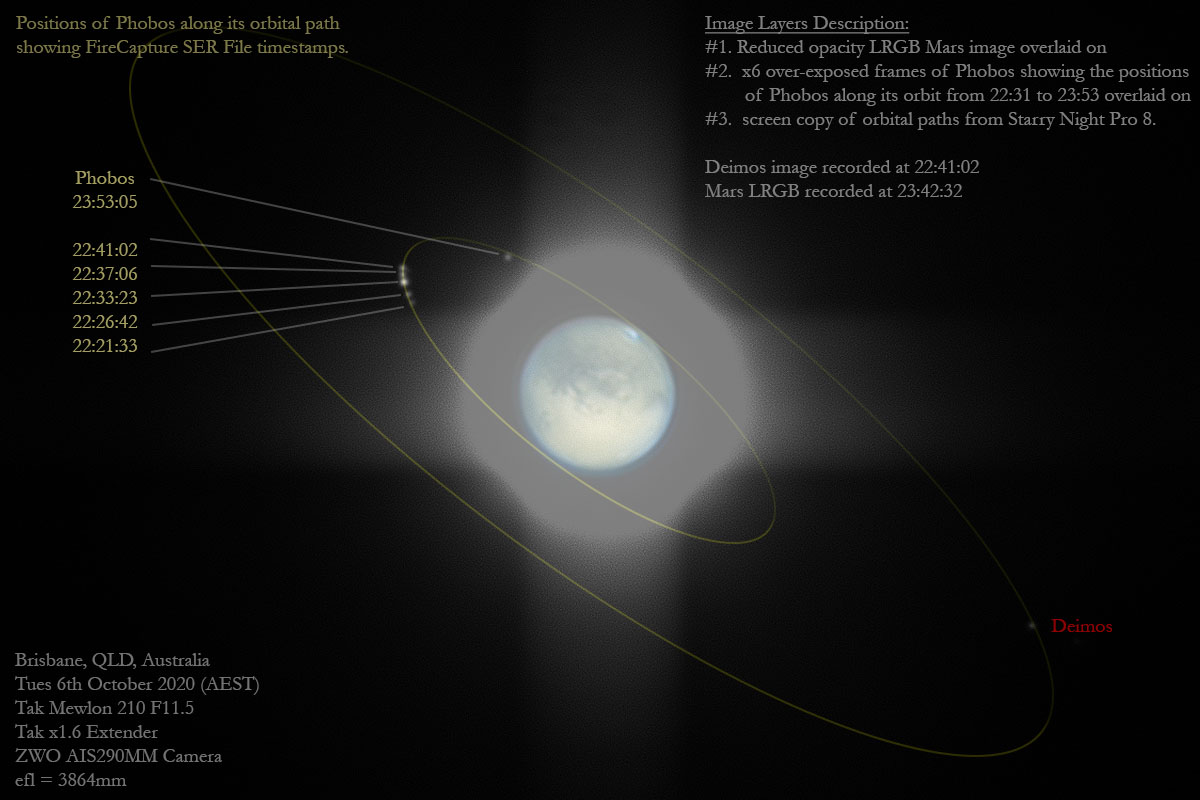
On Halloween fear and dread will stalk your night skies, also known as Phobos and Deimos the moons of Mars. The 2020 opposition of Mars was on October 13, so the Red Planet will still rise shortly before sunset. Near Halloween's Full Moon on the sky, its strange yellowish glow will outshine other stars throughout the night. But the two tiny Martian moons are very faint and in close orbits, making them hard to spot, even with a small telescope. You can find them in this carefully annotated composite view though. The overexposed planet's glare is reduced and orbital paths for inner moon Phobos and outer moon Deimos are overlayed on digitally combined images captured on October 6. The diminutive moons of Mars were discovered in August of 1877 by astronomer Asaph Hall at the US Naval Observatory using the Great Equatorial 26-inch Alvan Clark refractor.