Mars
Mars is the fourth planet from the Sun and the seventh largest in the Solar System. A cold, dusty desert world with a thin atmosphere (mostly CO₂), the planet features extinct volcanoes, deep canyons, polar ice caps, and seasons. Mars has two small moons (Phobos and Deimos), a day just over 24 hours long, and a year lasting about 687 Earth days. It is a prime focus of robotic exploration and studies about past water and habitability.
Source: science.nasa.gov
APODs including "Mars"
Mars and the Beehive
10/06/2023
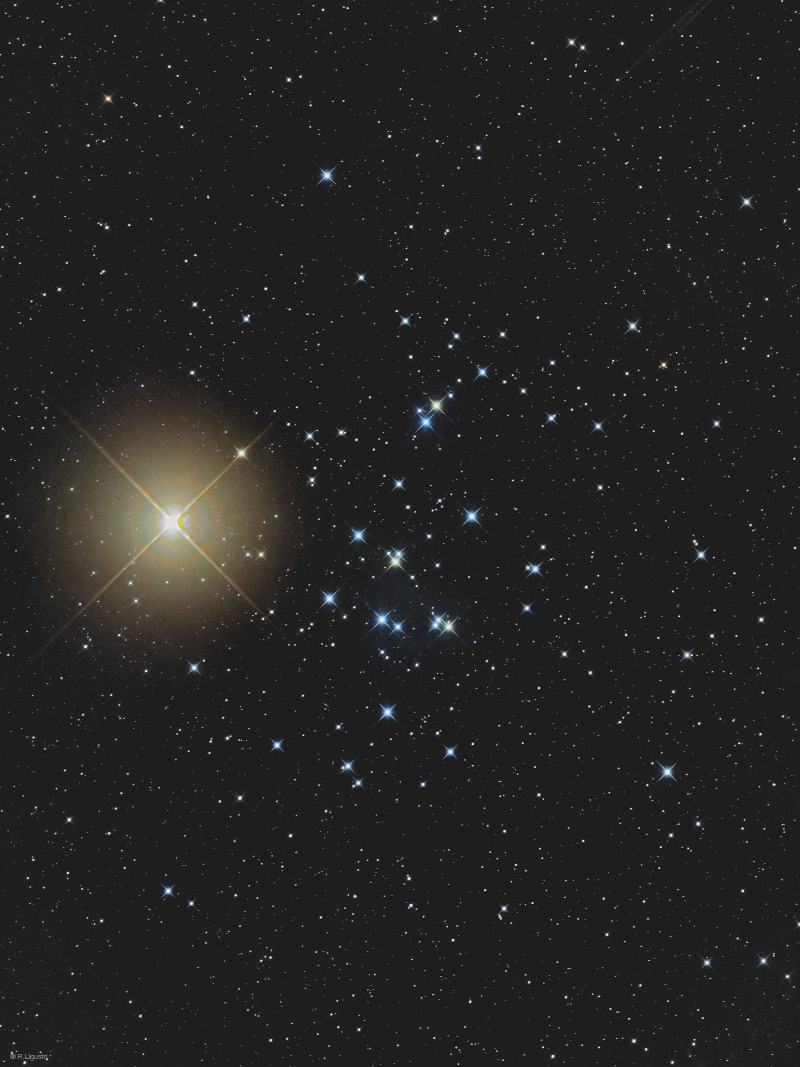
This month, bright Mars and brilliant Venus are the prominent celestial beacons in planet Earth's western skies after sunset. Wandering through the constellation Cancer the Crab, the Red Planet was captured here on the evening of June 3 near the stars of open cluster Messier 44. Recognized since antiquity this nearby, naked-eye star cluster is also known as the Praesepe or the Beehive cluster. A swarm of stars all much younger than the Sun, the Beehive cluster is a mere 600 light-years distant. Seen with a yellowish hue, Mars is about 17 light-minutes away. On June 12/13 Venus will take its turn posing next to the stars of the Beehive cluster. But the dazzling light of Venus will make the Beehive stars difficult to see by eye alone.