Mars
Mars is the fourth planet from the Sun and the seventh largest in the Solar System. A cold, dusty desert world with a thin atmosphere (mostly CO₂), the planet features extinct volcanoes, deep canyons, polar ice caps, and seasons. Mars has two small moons (Phobos and Deimos), a day just over 24 hours long, and a year lasting about 687 Earth days. It is a prime focus of robotic exploration and studies about past water and habitability.
Source: science.nasa.gov
APODs including "Mars"
Leopard Spots on Martian Rocks
28/09/2025
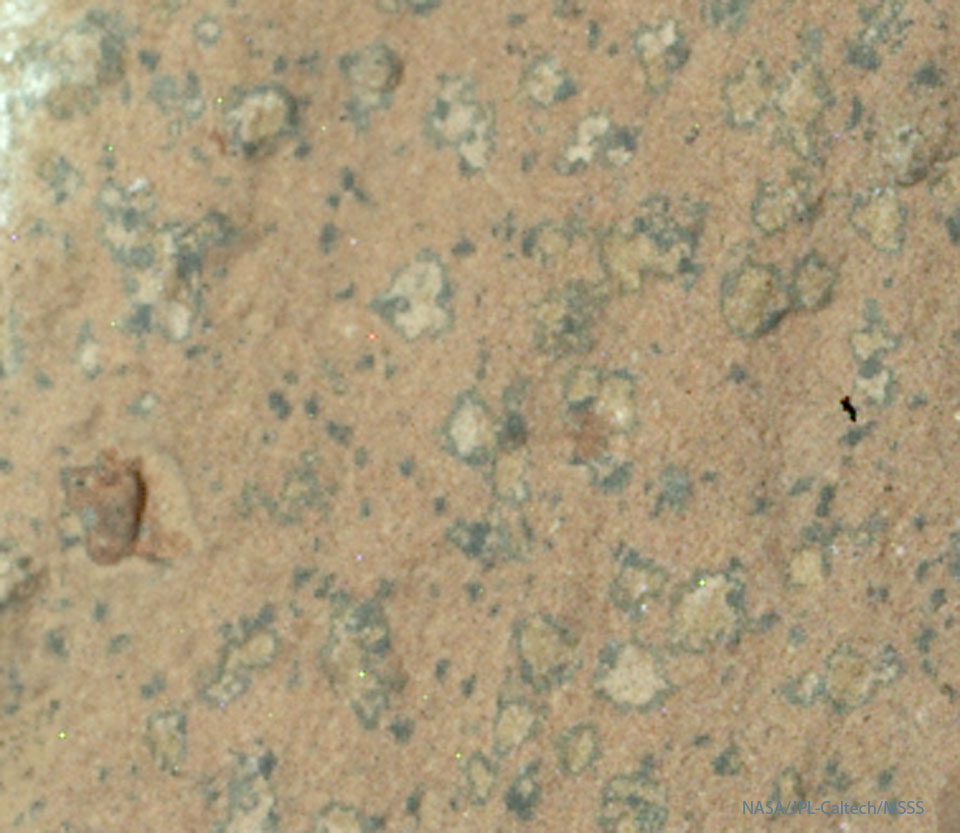
What is creating these unusual spots? Light-colored spots on Martian rocks, each surrounded by a dark border, were discovered last year by NASA's Perseverance Rover currently exploring Mars. Dubbed leopard spots because of their seemingly similarity to markings on famous Earth-bound predators, these curious patterns are being studied with the possibility they were created by ancient Martian life. The pictured spots measure only millimeters across and were discovered on a larger rock named Cheyava Falls. The exciting but unproven speculation is that long ago, microbes generated energy with chemical reactions that turned rock from red to white while leaving a dark biosignature ring, like some similarly appearing spots on Earth rocks. Although other non-biological explanations have not been ruled out, speculation focusing on this potential biological origin is causing much intrigue.