Milky Way
The galaxy that contains our Solar System, characterized by its barred spiral structure with multiple spiral arms extending from a central bar.
Source: esa.int
APODs including "Milky Way"
Simulated Gamma-ray Sky
31/05/2006
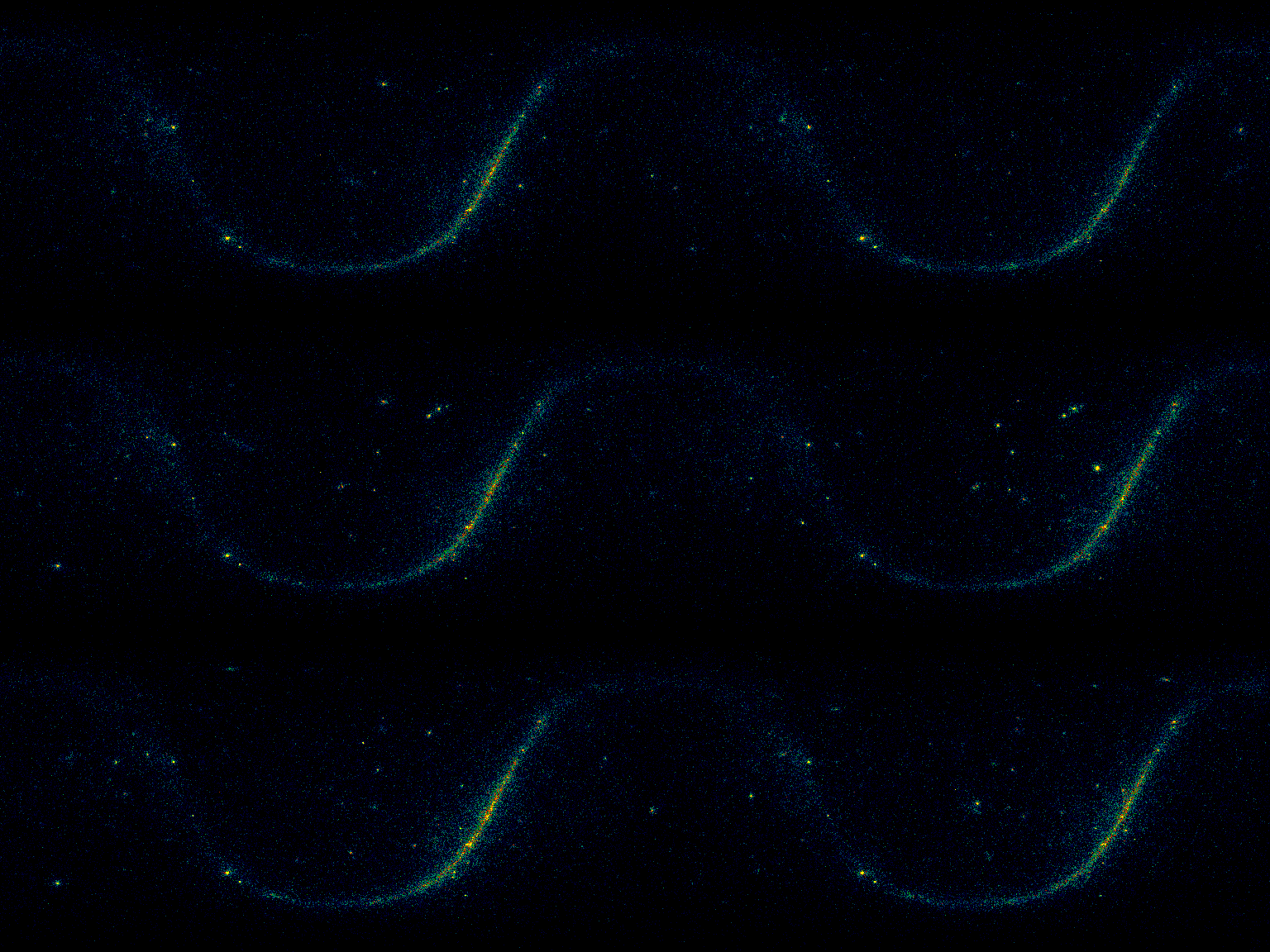
Scheduled for launch in 2007, the Gamma-ray Large Area Space Telescope (GLAST) will explore the Universe in gamma-rays, the most energetic form of light. To get ready, consider this dynamic gamma-ray sky animation - constructed from simulating the first 55 days (seen above at one frame per day) of GLAST observations of cosmic gamma-ray sources. The all-sky view is projected in an astronomical (RA-Dec) coordinate system that shows the plane of our Milky Way Galaxy as a broad U-shape, with the center of the galaxy toward the right. So what shines in this gamma-ray sky? Besides the diffuse Milky Way glow, astronomers testing their skills on the simulated data have found flaring active galaxies, pulsars, gamma-ray bursts, the flaring Sun, and of course, the gamma-ray Moon.