Nebula
A nebula is a giant cloud of gas (mostly hydrogen and helium) and cosmic dust situated between stars in the interstellar medium. Nebulae serve as sites of stellar birth and death—including emission nebulae that glow from ionized gas, reflection nebulae that scatter starlight, and dark nebulae that obscure background stars.
Source: science.nasa.gov
APODs including "Nebula"
M8: An Open Cluster in the Lagoon
27/01/1996
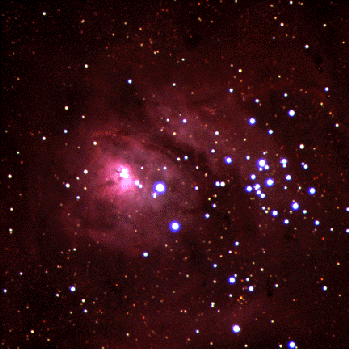
The large majestic Lagoon Nebula is home for many young stars and hot gas. The Lagoon Nebulae is so large and bright it can be seen without a telescope. Formed only several million years ago in the nebula is the open cluster known as NGC 6530, whose young stars show their high temperature by their blue glow. The nebula, also known as M8 and NGC 6523, is named "Lagoon" for the band of dust seen to the left of the open cluster's center. A bright knot of gas and dust in the nebula's center is known as the Hourglass Nebula. Star formation continues in the the Lagoon Nebula as witnessed by the many globules that exist there.