Nebula
A nebula is a giant cloud of gas (mostly hydrogen and helium) and cosmic dust situated between stars in the interstellar medium. Nebulae serve as sites of stellar birth and death—including emission nebulae that glow from ionized gas, reflection nebulae that scatter starlight, and dark nebulae that obscure background stars.
Source: science.nasa.gov
APODs including "Nebula"
M17: The Majestic Swan Nebula
29/08/1996
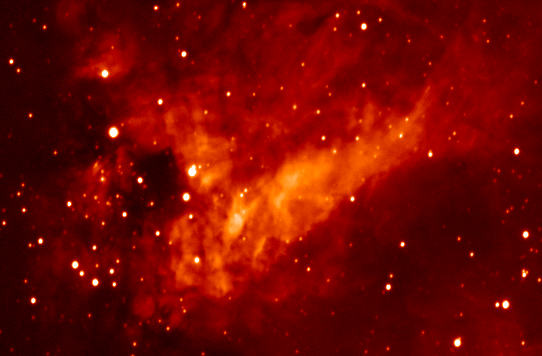
What unusual eggs have been laid by this majestic swan? The star forming region above, known as Swan Nebula, is the home of hot red-glowing gas, dark lanes of dust, bright young stars and -- what are those? Of the few stars visible in the Swan Nebula, several have quite unusual colors and are hypothesized to be very young stars still shrouded by gas from the cloud that formed them. The Swan Nebula is quite large and massive as it contains roughly 1000 times the mass of our Sun. The bright central region is about 15 light years across lies about 5000 light years away toward the constellation of Sagittarius. The distinctive shape causes this region to have several other names, including the Omega Nebula, the Horseshoe Nebula, and the Lobster Nebula.