Nebula
A nebula is a giant cloud of gas (mostly hydrogen and helium) and cosmic dust situated between stars in the interstellar medium. Nebulae serve as sites of stellar birth and death—including emission nebulae that glow from ionized gas, reflection nebulae that scatter starlight, and dark nebulae that obscure background stars.
Source: science.nasa.gov
APODs including "Nebula"
In the Center of the Keyhole Nebula
21/07/1997
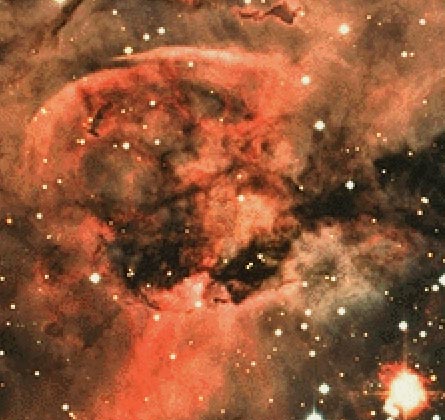
Stars, like people, do not always go gentle into that good night. The above Keyhole Nebula results from dying star Eta Carinae's violently casting off dust and gas during its final centuries. Eta Carinae is many times more massive than our own Sun, and should eventually undergo a tremendous supernova explosion. Eta Carinae emits much light in colors outside the human visible range. This past week, X-ray emission from Eta Carinae was verified by the orbiting Rossi X-Ray Timing Explorer to be periodic, peaking every 85.1 days. This, along with a previously hypothesized 5.52 year period, indicates that the dying star might be part of a multiple star system.