Nebula
A nebula is a giant cloud of gas (mostly hydrogen and helium) and cosmic dust situated between stars in the interstellar medium. Nebulae serve as sites of stellar birth and death—including emission nebulae that glow from ionized gas, reflection nebulae that scatter starlight, and dark nebulae that obscure background stars.
Source: science.nasa.gov
APODs including "Nebula"
Cold Wind From The Boomerang Nebula
15/10/1997
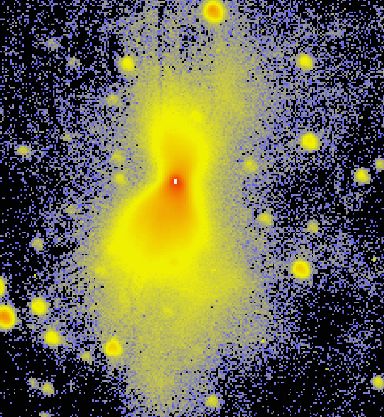
A cold wind blows from the central star of the Boomerang Nebula. Seen here in a false color image of dust reflected starlight, the nebula lies about 5,000 light-years away. The boomerang shaped cloud appears to have been created by a high-speed wind of gas and dust blowing from an aging central star at speeds of over 300,000 miles per hour. This rapid expansion has cooled the nebular gas to about -458 degrees Fahrenheit or 1 degree above absolute zero, making it the coldest region observed in the distant Universe. The frigid Boomerang nebula represents a unique object for astronomers and is believed to be a star or stellar system evolving toward the planetary nebula phase.