Nebula
A nebula is a giant cloud of gas (mostly hydrogen and helium) and cosmic dust situated between stars in the interstellar medium. Nebulae serve as sites of stellar birth and death—including emission nebulae that glow from ionized gas, reflection nebulae that scatter starlight, and dark nebulae that obscure background stars.
Source: science.nasa.gov
APODs including "Nebula"
The Cygnus Loop
08/08/1998
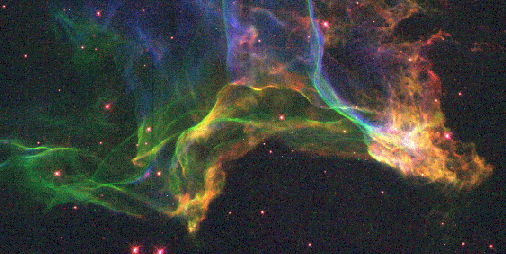
15,000 years ago a star in the constellation of Cygnus exploded -- the shockwave from this supernova explosion is still expanding into interstellar space! The collision of this fast moving wall of gas with a stationary cloud has heated it causing it to glow in visible as well as high energy radiation, producing the nebula known as the Cygnus Loop (NGC 6960/95). The nebula is located about 2500 light years away. The colors used here indicate emission from different kinds of atoms excited by the shock; oxygen-blue, sulfur-red, and hydrogen-green. This picture was taken with the Wide Field and Planetary Camera 2 on board the Hubble Space Telescope.