Nebula
A nebula is a giant cloud of gas (mostly hydrogen and helium) and cosmic dust situated between stars in the interstellar medium. Nebulae serve as sites of stellar birth and death—including emission nebulae that glow from ionized gas, reflection nebulae that scatter starlight, and dark nebulae that obscure background stars.
Source: science.nasa.gov
APODs including "Nebula"
Celebrating Hubble With NGC 6751
07/04/2000
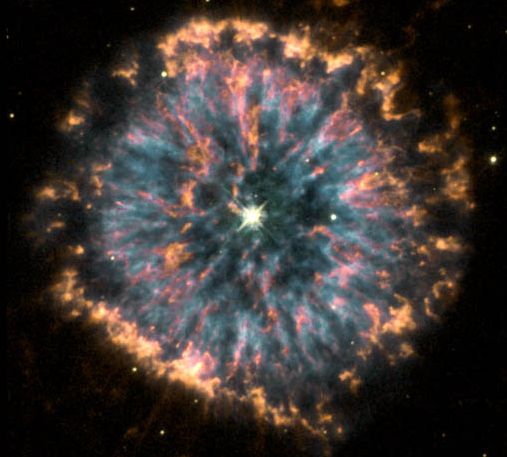
Planetary nebulae do look simple, round, and planet-like in small telescopes. But images from the orbiting Hubble Space Telescope have become well known for showing these fluorescent gas shrouds of dying Sun-like stars to possess a staggering variety of detailed symmetries and shapes. This composite color Hubble image of NGC 6751 is a beautiful example of a classic planetary nebula with complex features and was selected to commemorate the tenth anniversary of Hubble in orbit. The colors were chosen to represent the relative temperature of the gas - blue, orange, and red indicating the hottest to coolest gas. Winds and radiation from the intensely hot central star (140,000 degrees Celsius) have apparently created the nebula's streamer-like features. The nebula's actual diameter is approximately 0.8 light-years or about 600 times the size of our solar system. NGC 6751 is 6,500 light-years distant in the constellation Aquila.