Nebula
A nebula is a giant cloud of gas (mostly hydrogen and helium) and cosmic dust situated between stars in the interstellar medium. Nebulae serve as sites of stellar birth and death—including emission nebulae that glow from ionized gas, reflection nebulae that scatter starlight, and dark nebulae that obscure background stars.
Source: science.nasa.gov
APODs including "Nebula"
M17: Omega Nebula Star Factory
19/09/2000
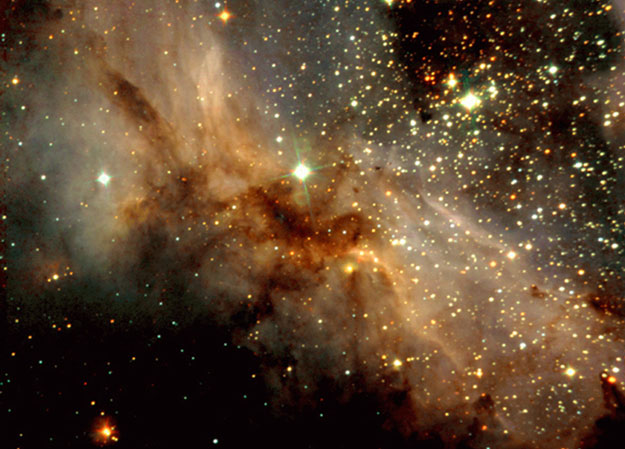
In the depths of the dark clouds of dust and molecular gas known as M17, stars continue to form. Visible in the above recently released representative-color photograph of M17 by the New Technology Telescope are clouds so dark that they appear almost empty of near infrared light. The darkness of these molecular clouds results from background starlight being absorbed by thick carbon-based smoke-sized dust. As bright massive stars form, they produce intense and energetic light that slowly boils away the dark shroud. M17's unusual appearance has garnered it such nicknames as the Omega Nebula, the Horseshoe Nebula, and the Swan Nebula. M17, visible with binoculars towards the constellation of Sagittarius, lies 5000 light-years away and spans 20 light-years across.