Nebula
A nebula is a giant cloud of gas (mostly hydrogen and helium) and cosmic dust situated between stars in the interstellar medium. Nebulae serve as sites of stellar birth and death—including emission nebulae that glow from ionized gas, reflection nebulae that scatter starlight, and dark nebulae that obscure background stars.
Source: science.nasa.gov
APODs including "Nebula"
The Incredible Expanding Crab
27/12/2001
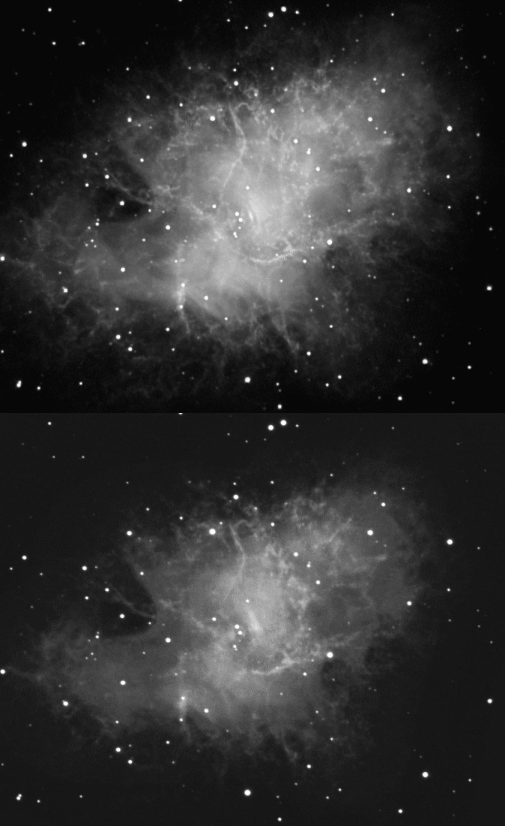
The Crab Nebula is cataloged as M1, the first on Charles Messier's famous list of things which are not comets. In fact, the Crab is now known to be a supernova remnant, an expanding cloud of debris from the explosion of a massive star. The violent birth of the Crab was witnessed by astronomers in the year 1054. Roughly 10 light-years across today, the nebula is still expanding at a rate of over 1,000 kilometers per second. Flipping between two images made nearly 30 years apart, this animation clearly demonstrates the expansion. The smaller Crab was recorded as a photographic image made in 1973 using the Kitt Peak National Observatory 4-meter telescope in 1973. The expanded Crab was made this year with the Kitt Peak Visitor Center's 0.4-meter telescope and digital camera. Background stars were used to register the two images.