Nebula
A nebula is a giant cloud of gas (mostly hydrogen and helium) and cosmic dust situated between stars in the interstellar medium. Nebulae serve as sites of stellar birth and death—including emission nebulae that glow from ionized gas, reflection nebulae that scatter starlight, and dark nebulae that obscure background stars.
Source: science.nasa.gov
APODs including "Nebula"
Sharpless 140
20/05/2004
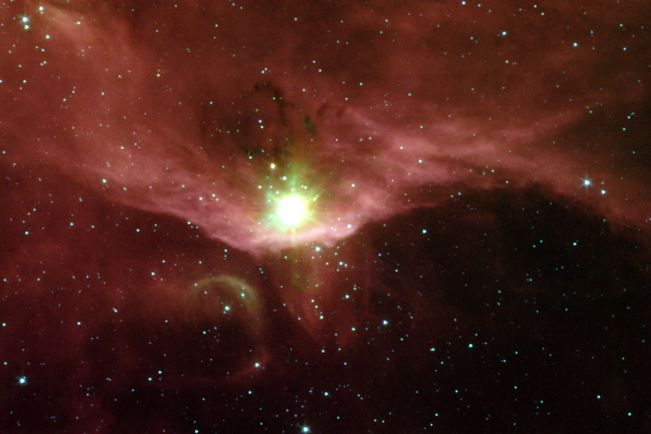
Three young, massive stars will eventually emerge from this natal cloud of dust and gas, but their presence is already revealed in this false-color image from the Spitzer Space Telescope. The picture offers a penetrating infrared view of an emission nebula cataloged as Sharpless 140 which lies about 3,000 light-years away toward the constellation Cepheus. The young stars are otherwise obscured in visible light images by the dusty environs. Sculpted by winds and radiation from hot stars in the region, the majestic arcing structures pictured here are tens of light-years across and contain surprisingly complex molecules - polycyclic aromatic hydrocarbons (PAHs) - that glow in the infrared. An amazingly detailed record of cosmic markers of star formation, the image hints at the wealth of infrared data now freely available in the Spitzer Space Telescope archive.