Nebula
A nebula is a giant cloud of gas (mostly hydrogen and helium) and cosmic dust situated between stars in the interstellar medium. Nebulae serve as sites of stellar birth and death—including emission nebulae that glow from ionized gas, reflection nebulae that scatter starlight, and dark nebulae that obscure background stars.
Source: science.nasa.gov
APODs including "Nebula"
Dust and Light in the Rosette Nebula
14/02/2006
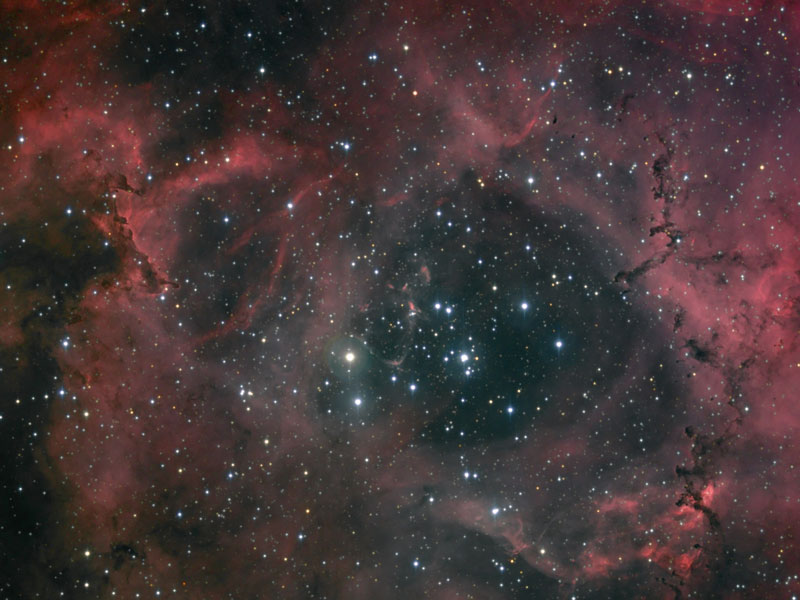
What creates the cosmic dust sculptures in the Rosette Nebula? Noted for the common beauty of its overall shape, parts of the Rosette Nebula, also known as NGC 2244, show beauty even when viewed up close. Visible above are globules of dark dust and gas that are slowly being eroded away by the energetic light and winds by nearby massive stars. Left alone long enough, the molecular-cloud globules would likely form stars and planets. The Rosette Nebula spans about 50 light-years across, lies about 4,500 light-years away, and can be seen with a small telescope towards the constellation of Monoceros. Happy Valentine's Day from the folks at APOD.