Nebula
A nebula is a giant cloud of gas (mostly hydrogen and helium) and cosmic dust situated between stars in the interstellar medium. Nebulae serve as sites of stellar birth and death—including emission nebulae that glow from ionized gas, reflection nebulae that scatter starlight, and dark nebulae that obscure background stars.
Source: science.nasa.gov
APODs including "Nebula"
Polaris Dust Nebula
11/01/2008
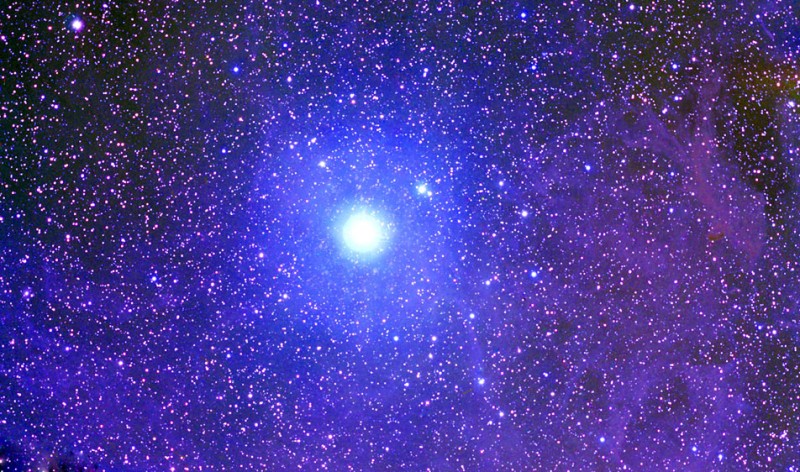
Centered on North Star Polaris, this 4 degree wide field of view covers part of a complex of relatively unfamiliar, diffuse dust clouds soaring high above the plane of our Milky Way Galaxy. The combined light of the Milky Way stars are reflected by the dusty, galactic cirrus, the reflected starlight having the same blue tint characteristic of better known reflection nebulae. But this deep color image also records a faint reddish luminescence from the dust grains as they convert invisible stellar ultraviolet radiation to visible red light. Dubbed extended red emission, the dim cosmic glow is thought to be caused by complex organic molecules known as PAHs (polycyclic aromatic hydrocarbons), common constituents of interstellar dust. On planet Earth, PAHs are widely encountered as the sooty products of combustion.