Nebula
A nebula is a giant cloud of gas (mostly hydrogen and helium) and cosmic dust situated between stars in the interstellar medium. Nebulae serve as sites of stellar birth and death—including emission nebulae that glow from ionized gas, reflection nebulae that scatter starlight, and dark nebulae that obscure background stars.
Source: science.nasa.gov
APODs including "Nebula"
The Eagle Nebula in Hydrogen, Oxygen, and Sulfur
27/02/2008
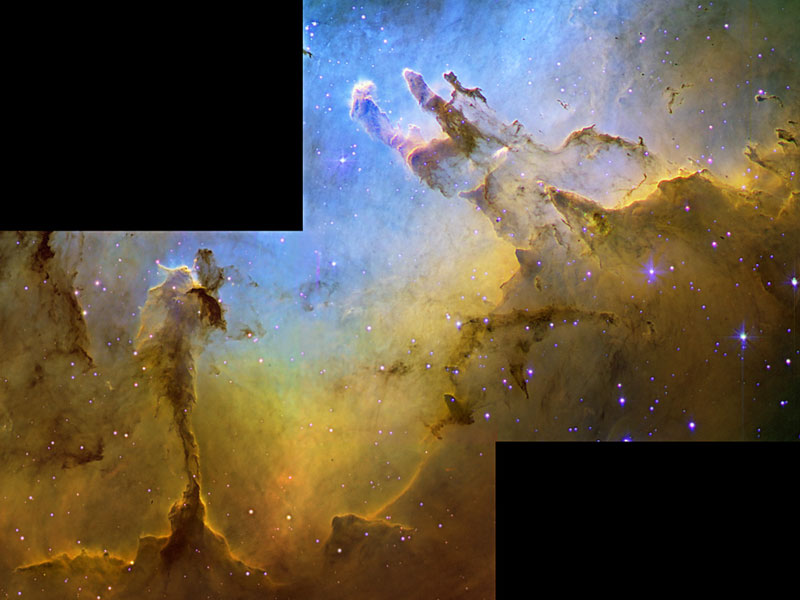
Bright blue stars are still forming in the dark pillars of the Eagle Nebula. Made famous by a picture from the Hubble Space Telescope in 1995, the Eagle Nebula shows the dramatic process of star formation. The above picture taken by a 0.8-meter telescope in the Canary Islands captures part of M16, the open cluster of stars that is being created. The high amount of detail in the above image results from it being taken only in specific colors of light emitted by hydrogen, oxygen, and sulfur. The bright blue stars of M16 have been continually forming over the past 5 million years, most recently in the famous central gas and dust columns that have been informally dubbed the Pillars of Creation and the Fairy. Light takes about 7,000 years to reach us from M16, which spans about 20 light years and can be seen with binoculars toward the constellation of the Serpent (Serpens).