Nebula
A nebula is a giant cloud of gas (mostly hydrogen and helium) and cosmic dust situated between stars in the interstellar medium. Nebulae serve as sites of stellar birth and death—including emission nebulae that glow from ionized gas, reflection nebulae that scatter starlight, and dark nebulae that obscure background stars.
Source: science.nasa.gov
APODs including "Nebula"
The Pillars of Eagle Castle
10/07/2009
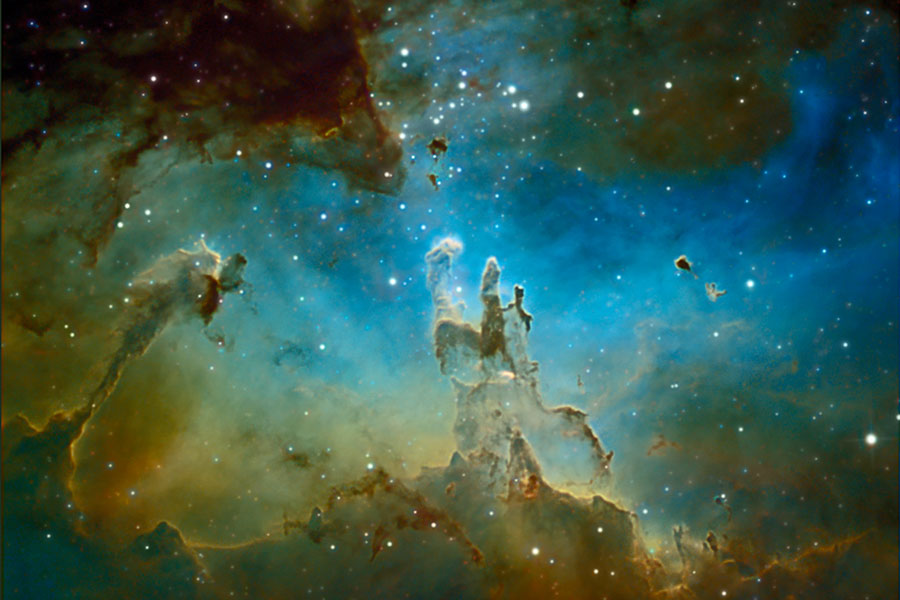
What lights up this castle of star formation? The familiar Eagle Nebula glows bright in many colors at once. The above image is a composite of three of these glowing gas colors. Pillars of dark dust nicely outline some of the denser towers of star formation. Energetic light from young massive stars causes the gas to glow and effectively boils away part of the dust and gas from its birth pillar. Many of these stars will explode after several million years, returning most of their elements back to the nebula which formed them. This process is forming an open cluster of stars known as M16.