Nebula
A nebula is a giant cloud of gas (mostly hydrogen and helium) and cosmic dust situated between stars in the interstellar medium. Nebulae serve as sites of stellar birth and death—including emission nebulae that glow from ionized gas, reflection nebulae that scatter starlight, and dark nebulae that obscure background stars.
Source: science.nasa.gov
APODs including "Nebula"
Gamma Cas and Friends
24/12/2009
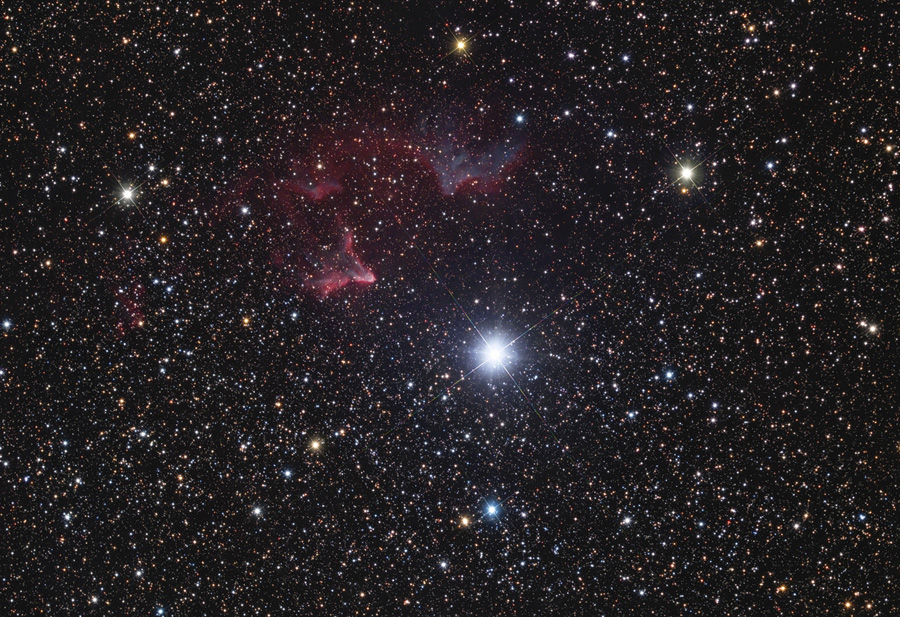
Gamma Cassiopeiae shines high in northern autumn evening skies. The brightest spiky star in this rich and colorful Milky Way starfield, bluish Gamma Cas marks the central peak in the W-shaped constellation Cassiopeia. A hot, variable, and rapidly rotating star about 600 light-years distant, Gamma Cas also ionizes surrounding interstellar material, including the wispy IC 63 (left) and IC 59 emission and reflection nebulae. The two faint nebulae are physically close to Gamma Cas, separated from the star by only a few light-years. This well-composed, wide-field view of the region spans almost 2 degrees on the sky.