Nebula
A nebula is a giant cloud of gas (mostly hydrogen and helium) and cosmic dust situated between stars in the interstellar medium. Nebulae serve as sites of stellar birth and death—including emission nebulae that glow from ionized gas, reflection nebulae that scatter starlight, and dark nebulae that obscure background stars.
Source: science.nasa.gov
APODs including "Nebula"
Spitzer's Orion
10/04/2010
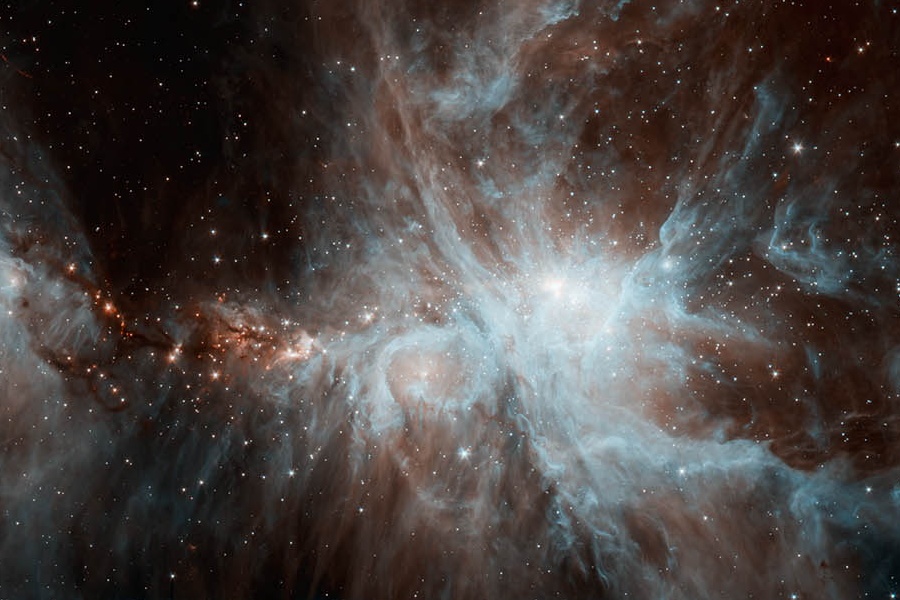
Few cosmic vistas excite the imagination like the Orion Nebula, an immense stellar nursery some 1,500 light-years away. Spanning about 40 light-years across the region, this new infrared image from the Spitzer Space Telescope was constructed from data intended to monitor the brightness of the nebula's young stars, many still surrounded by dusty, planet-forming disks. Orion's young stars are only about 1 million years old, compared to the Sun's age of 4.6 billion years. The region's hottest stars are found in the Trapezium Cluster, the brightest cluster near picture center. Spitzer's liquid helium coolant ran out in May 2009, so this false color view is from two channels that still remain sensitive to infrared light at warmer operating temperatures.